
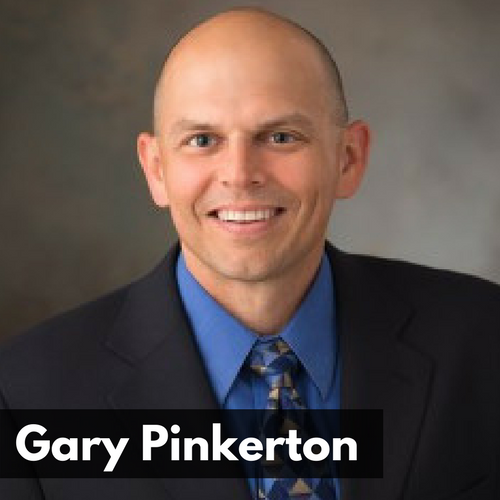
In this episode, Gary Pinkerton talks about student loan debt. He shares that one reason people stay in school is to put off paying their debt back. Gary also explains that 1/3 of the borrowers from the government’s grad school lending programs have gone into loan forgiveness. Lastly, he shares a case study of student loan debt hell.
Announcer 0:04
Welcome to the heroic investing show. As first responders we risk our lives every day our financial security is under attack. Our pensions are in a state of emergency. A single on duty incident can alter or erase our earning potential instantly and forever. We are the heroes of society. We are self reliant and we need to take care of our own financial future. The heroic investing show is our toolkit of business and investing tactics on our mission to financial freedom.
Gary Pinkerton 0:39
Hello, and welcome to Episode 118, Episode 118 of the heroic investing show, where we focus on challenges unique to members of the armed services, first responders, firefighters, police officers, EMTs, and also veterans and retired members of those forces. But we also focus on those that are common to all investors, individuals who are looking to get some passive income to replace their w two job, perhaps to start a business or venture off on their own to become an entrepreneur and investor and someone who has more flexibility with their time. Today’s guest on the show is yours truly I’m going to do just a bit of a monologue here today, it probably won’t be an extremely long episode. But I wanted to give you my takeaways from a couple of recent events. So I was in New York City with the Jason Hartman venture Alliance mastermind on this past weekend, Memorial Day weekend. And again, everyone happy Memorial Day, and thanks for what you do to continue to put on the uniform for those of you doing so those of us who have hung up the uniform and are pursuing other things, and that might be golf, it might be our own personal businesses like myself. But regardless, thanks for continuing to do what you all do. When I was up in New York City here for the decentralized mastermind, you know, is a pretty decent sized group this year was there with my good friend Pat Donahoe, and of course, Jason Hartman and many other close friends in that group. It was interesting that we were in New York City, and that I came across an article that I wanted to dive into a little bit. And it has to do with where money is flowing around the country. And yet another unintended consequence, something that’s building that’s very similar to what we saw with the real estate bubble, that led up to 2007 2008. And then the economic crisis that was felt, frankly, across the world, as a result of having pumped a bunch of money into that bubble of real estate. And so the current bubble, and this is no surprise to everyone probably, is the student loan bubble. And I would say there’s there’s a bubble and a few different places, you know, Peter Schiff would say that there’s just an overall credit bubble, and I think he’s probably right. But there’s a likely I think it would be a good argument that there’s not a bubble right now in real estate and at least not as significant one or a substantial standout one. But there is certainly a bubble in some other areas, like there’s an auto loan bubble, a car loan bubble, and then there is certainly a student loan bubble. Before I get to that, though, wanted to talk about how the national bird, the crane, CRA na, of course, I’m just being funny. The ones that are used to put up buildings has migrated into New York City without question, I’m sure it’s an immediate I know it’s in major cities across the country and across the globe. Seems that that national bird, the metal crane, that indicates lots and lots of a building in major cities, has historically been an indication of a top of the market at a time where there’s lots and lots of money sloshing around and looking for a home. And so as part of the venture Alliance mastermind, we did a tour riverboat dinner cruise, and went up the Hudson and turned and went around by the Statue of Liberty and went up the East River back down to see the Statue of Liberty at sunset. I’m telling you, it was an amazing, amazing event. It was beautiful.
But what I kept seeing and I was sitting next to Patrick Donahoe and an awesome economist and individual but gets me into deep discussions that I learned so much about. We were talking and studying on our iPhones as you can do nowadays, by googling and doing research, we were trying to figure out the amount of money that it cost to build these new skyscrapers, for example, then I really didn’t have a good feel for the scale. But One World Trade Center or the Freedom Tower was pretty close to $4 billion, it was 3.8 billion now it probably does not surprise you too much. What was surprising is that the you know, relatively short compared to luxury condominium buildings that have been going up and there’s I would say there’s 20 or 30 of them that have replaced old warehouses and things like that on the waterfront there in New York City. And surprisingly, or pushing down rental prices. We had my friends, Sean and Tanya that were visiting, but that live in New York City. They They were saying that for the first time in a while their rents have kind of stabilized. And there’s a lot of, you know, demand and you’re starting to get other features, like amenities and, you know, move in bonuses and things like that they haven’t seen in New York City in quite a while. But you know, these new residential buildings, skyscrapers, some of them are mixed use have certainly increased options in New York City and have kind of reduced down the price wars and things that even those buildings, you know, when we were researching them, they were three to three and a half billion dollars for each one of these buildings. And so you think about, you know, what drives the economy in New York City? And how is it reasonable, that buildings of that size, that scale, that expense can continue to be going up in that city. And it’s really the financial industry, right. So it’s, you know, there’s other markets that fall out below that there’s, you know, the financial industry creates growth in, you know, of course, the construction industry and the services industry, for all the people that to serve, the popular, you know, the people who are building these and that are running the service, the financial industry, but there’s just an incredible amount of money sloshing around the US economy right now looking for a home and one of those homes, that it has been going to his new construction, clearly. I mean, it’s, it’s probably very difficult to try to put to work the level of money that Blackstone and other major hedge funds need to put to work and all the foreign investment and stuff that coming into the US. And so those need to go into very, very large projects that have a lot of price tag behind them, right, so, so building billion dollar buildings, that was hard to say, constructing billion dollar buildings, maybe that’s easier, is one way in which you can put a tremendous amount of money that has been created out of, you know, credit lending from the Federal Reserve over the last decade, you know, in other places get that money put to work. And so that’s certainly one way they’re spending it. It is building very large, expensive buildings in New York City and other places.
But what I really wanted to talk about was the student loan debt crisis. What brought me onto this topic was reading a newspaper, The Wall Street Journal, it was the weekend edition, I don’t know if any of you had seen it. But on the front page, and then, in a later section, almost two pages dedicated to a story about the $1 million student loan debt. And the quote under it from the gentleman who was was interviewed was should I be doing this. And this was fascinating to me. And it was also an indication of the bubble, the credit bubble or the student loan bubble that we saw develop in real estate. So the subtitle there is that a Utah orthodontist, and his name is Mike Maru. So Utah orthodontist and 100 other people in the United States now carry seven figures, student loan debt, meaning that their student loan debt was, is over a million, they’ve accrued over a million dollars of student loan debt. So when you initially think about that, you know, I was trying to do the math, and I thought, My gosh, what was that, like $200,000 a year for graduate school, maybe you had a little bit of undergraduate, you know, loan debt still remaining, and then he went into graduate school. But still, no matter how you select that, it would have to be, you know, 150 to $200,000 a year, and it probably was over 100,000. But the part that was not obvious to me that I hadn’t been thinking about too much as I’m leading up to, you know, my kids starting to consider what they’re going to go to college and on both of them, you know, now in high school, or soon to be in high school, and one of them graduating soon, I was thinking on the order of, you know, 40 to $50,000, for for student loans per year could be, you know, the upper end. And I realized that, you know, if you send them to Harvard, or some other super expensive places are medical school, and maybe it will top out above that, but I really have to admit, I did think that, you know, $200,000 was in the realm of reasonable annual cost to build up from student loans. But one of the things that I came to appreciate that I had not before appreciated, is what you can finance in your student loan. So you’re able to put your housing, your living expenses, food, you know, groceries, probably your automobile to, you know, to take you back and forth to school. So there’s a lot of stuff that could get wrapped up into student loans now, and I just flat did not recognize that we had distorted things to the level where people are able to actually finance 1000s of dollars every month for living expenses, in addition to books and tuition and all and all of that.
So that’s how this gentleman was able to, you know, with a family, a growing family in his 30s build a massive such a large amount of debt. So one of the things that I wanted to dig into here was simply, you know, kind of the numbers. But before we get there, though, a couple other quick points. So I’ve noticed a lot of clients, I’ve been talking with several my clients and as many of you know, in the personal finance industry, I am introducing individuals to ways in which they you know, alternatives to saving growing their money and funding our retirement. Predominantly, it is traditional, more of a traditional approach, not the more typical stocks, bonds, mutual funds approach that you hear of today. But a more traditional move back to traditional finance, personal finance that guys like Carnegie talked about, that was around in the 1800s. And that is insurance based financial planning. So it’s a concept of protecting, storing, growing and protecting meaning from being, you know, confiscated or lost, but also from loss through the slow and sometimes fast drip of taxes. So a lot of my clients that I talked with comment that they have large student loans, and it’s not uncommon to hear 100 200 $250,000 student loans, but that they’re in deferment, and for years and years, and the alarming trend that I’ve been recognizing with my clients is that many of them are in school for seemingly unrelated things in college, and I asked what’s the thought on going to school for that. And when you dig down deep enough, one of the primary reasons for being in school is because if you remain in college and continue to have mounting debts, where you’re continuing to pay for education, you were able to put off making payments. And I’ve had a couple of clients actually, comment to me something that I was getting a little bit concerned about, which is that they are in school solely. So they don’t have to make their payments because they can’t afford to make the payments.
So imagine that, like you have some crazy lending organization, that’s, you know, they’re crazy only because they’re backed by the US government. So you know, they have kind of a guarantee that even if this loan goes bad, that they’ll still be made hold, they’re willing to loan to someone for no better reason in the person is, you know, the business model is, I would like to borrow this money so that I don’t have to repay my other loans, because in fact, I can’t afford to pay those loans. And in our infinite wisdom here in the United States, we chose to make student loan, the one thing that you cannot default on, so why would you make a law that you’re unable to default on a loan unless you knew that everyone was going to go do that? Right, so so it’s just another indicator that you know, the people who are making these loans, the organizations making these loans, know that they’re bad business deals so much to the point where they said, if we make these deals, you have to protect this US government, meaning that you can’t let these people walk away from these really bad deals that they’re making, you know, bad financial deals. So back to a little bit closer back to the story here. So the second point on that, and getting back to the story, it says that Mike Maroon an orthodontist who had gone to school in California for his medical program is currently paying 15 $100, so almost 1600 1600 a month. But that’s not enough to cover the interest. And I think that’s probably obvious for you on a million dollar loan, even if it was amortized out 30 years for like a home mortgage, you know, your loan amount would be somewhere around $5,000 a month. And so he’s only paying 1500. And since it’s not enough to cover it, they’re allowing him to do that. But what it’s doing is it’s causing the loan balance to go up every month, because he’s not paying enough of it, right. He’s just kind of making a small portion of it. So people see that happened with credit cards.
And I can remember back when I first the moment that I realized that we were in big, big trouble before 2008. And nine, this was probably I mean, I wasn’t really early to the game, it was probably late 2007. And I was reading an article again in the Wall Street Journal. And it’s one of the few times, you know, in the military as an active active officer, and that you just just don’t have time to release. I didn’t, I didn’t have a good routine to do that. And so I happened to be in a school that one week program in my command training pipeline. And I had an opportunity, I was waiting on this lecture to start in a big lecture hall and memory exactly where I was sitting. And I have the Wall Street Journal open drinking my coffee. And I read that the most popular loans, a majority of loans started in that month, were reverse amortized loan. And at the time, I didn’t even know what that meant. But when I went and studied it, I realized that the same thing that we just talked about here with suit loans, and specifically people because the housing prices, the home prices had risen so much there in 2007, and 2008, people could not afford to make the monthly payments. So we had played with every lever at that point that we could we had gotten a bunch of adjustable rate mortgages and reduce the rate as far as anyone could market could bear. They had extended out the mortgages out to 40 years plus they had gone to interest only loans, we didn’t have to pay the principal at all, we’d reduce the down payment amounts, done everything that could possibly be done to extend that buying spree and real estate and to put it you know, they done liar loans, so you don’t actually have to qualify, right? So everyone remembers these things. But the last thing was that, hey, listen, we’ve done everything we can, and people can’t afford the monthly payments. And so they just artificially lowered the monthly payment. So somebody who should have been paying a $3,000 principal and interest payment, the banks just simply said, Listen, we’ll let him pay 1000 instead of 3000. And we’ll just add the other 2000 to the loan balance and we’ll just keep increasing. center loan balance as you go along. So now that’s what’s happening with student loans because people cannot afford the student loans.
Okay, so a little bit here on this scope or the scale of this problem in America, and then we’ll kind of get into a few of the numbers to talk about, you know, what Mike Maru has decided to do and what likely we’ll see a lot of other people do. So, okay, the scope, you know, there are about 50 million people with student loan debt, 50 million people in America with student loan debts. And about 6%, or two and a half million of those two and a half million people have loans that are, you know, increasing and that are having to start to look at these reverse amortized loans or the pain less, and they can actually fund and so they’re, you know, the average buyer or average investor only has about $17,000 in loans. But there’s about two and a half million that are over 100,000 that are starting to look at this kind of reversed amortized process. And the article goes on to say something else that’s fairly sobering that more than a third of the borrowers from one of the government’s mean, grad school lending programs annotates that more than a third have gone into some form of federal loan forgiveness program. So I know there’s there’s several of those, but the most popular that came out a couple of years ago, under the Obama administration was one called wage garnishment. Or the concept was that you would make payments from your income that could not exceed 1/3 of your monthly income as I remember it, but you would make those payments for 20 years, and then all would be forgiven. And that’s something similar to what Mike Maru had gone into here with has started here with his program. Okay, so digging a little bit more into Mike Roos specific situation in one of the, you know, the program that he’s in, and what they use the money for. So he, as I mentioned, was in college in California. And the amount that he was paying was $91,000. semester, excuse me a year. So USC program that he was in $91,000. And when he added in living expenses, their rent, food, clothing, or not clothing, but their food and other expenses, he was racking up $137,000 of living expenses. And and of course, the interest that went with that, initially, it was at 4.75, and then went up over 6%.
So this program, he’s in called grad plus was created by Congress in 2005. And its intent was after removing all of the loan limits was to allow grad students to borrow for expenses, like rent and other living costs to allow them to focus more on school, and so that they did not have to borrow from private banks. So again, you know, when you think about Federal Reserve printing money, and we don’t have a buyer for our money, to an extent, by doing things like removing limits, and allowing students to borrow for whatever they wanted associated with college, that creates a buyer for the new money that’s being created from the Federal Reserve. So I don’t know that it’s a substantial one. It’s not like foreign governments, by the money, but it is to what extent creating a source use for the funds. So after finishing his program, of course, mike got into a great practice where he’s, you know, earning 238,000 a year, and they purchased a home of 400,000. It’s got, you know, panoramic views of the mountains, he drives a used Tesla, and they’ve taken a couple of vacations, none of this, and my saying is necessarily inappropriate for them. But without entering the government forgiveness program, and specifically, what he’s agreed to on that program, is to make monthly payments of 10% of his discretionary income, and they got a calculation for that. And then after 25 years, his remaining debt is forgiven. Essentially, it’s being covered by taxpayers, right to pay off the commitments to the original lenders. His interest rate is 7.25. And his balance has been growing about 148,000 a year. So why is that happening? Well, because his on limited or if you were not in that program, his payment required payment would be $10,500 per month. And his actual income from his job is, you know, after expenses is 13,000 a month. So clearly it would take up our after taxes, what I meant to say so would take up almost all of the family’s income, even with, you know, a large, successful practice income that he has. But now we’re getting to the catch, and I’ll stop with all the numbers here in a moment. So remember, he’s got over a million dollars right now. Dad’s he’s in this program, where he’ll make payments of 10% of his income, discretionary income for the next 25 years. And assuming he makes payments at that level, his debt will continue To increase because again, he’s doing this kind of reversed amortized minimal payment. And at the end, he is that will have grown from 1 million, up to $2 million. And at that point, that larger $2 million debt will be forgiven. And you know, handed off to taxpayers to make that whole, really what we’ll do is we’re added to the national debt, and likely no one will pay that.
But here’s the catch. And this is the part that you know, debt forgiveness really does not catch. And this gets people who have had these debts really caught up in endangered indentured servitude for quite a while. And likely, he will have to go through an additional forgiveness program of some sort to get rid of this. And that is that when he is forgiven the debt of $2 million, after 25 years of making payments, so now, you know, he’s going to be roughly 60, he will have a tax bill on a forgiven $2 million debt that is on the order of $700,000. So when you’re forgiven, that it’s looked at as a gift to you from the taxpayers, or from the government of $2 million to settle your debts, and so that his tax on $2 million in today’s tax world would be, you know, the equivalent of making that $2 million that year, all in one year. And that’s a $700,000 set of additional taxes that you’d have to pay that year, likely, the gentleman is not going to have $700,000. And so he’ll have to then, you know, kind of snowball waterfall that into some other type of debt forgiveness or pay down plan that will take another decade or so. So now he’s in his early 70s. And starting to think about the concept of saving for retirement, that quite funky is not going to come. So that’s just the impact of one concept or one aspect, a student loan, a poor decision made on the path to student loans that can change your life, you know, for the rest of your life, you can make some decisions that will result in even what’s one of the best highest paying jobs in America, result in you not being able to pay off your debts and start looking for a program to save for retirement until you’re at the retirement age. And I have so many clients coming to me today. With this situation, you know, we have 100 plus 1000. In debts, we’ve put 10,000 or 20,000 into our 401k that’s not even sufficient to pay off the debts to start saving in the positive realm for retirement and they’re within 10 years of retirement is not an easy solution to that those are individuals that will be working for many, many years, beyond what you know, people think today are going to be an older time and so not intended to be a pitch about what we do at paradigm life or about you know, my approach or even a political statement. It is just a warning that as you know, those of you that are you know my age and have kids that are approaching college or have already started to make those decisions.
Please be very careful and run the math and think about what the unintended consequences are, what the long term consequences are. And I’d love to help you out. Use some of my calculators and some of my experience of what I’ve learned with the college options out there. I am not against the US education system, certainly not against being becoming educated. I am against saddling America’s youth with an inability to make decisions like I want to you know, quit my w two job and go start my own business because you lose those opportunities when you get into programs like government forgiveness, where you’re tied to making that w two wage garnished income, because you made some poor decisions going to college. So Alright, Gary’s off his soapbox. I hope I added some value with this little bit different podcasts this round. And look forward to hearing from Jason on the next episode, and then some great, great episodes that I’ve recorded with some patriots out there that you will soon hear from in the coming weeks. Thanks so much and have a wonderful week.
Jason Hartman 23:57
Thank you so much for listening. Please be sure to subscribe so that you don’t miss any episodes. Be sure to check out the show’s specific website and our general website Hartman Mediacom for appropriate disclaimers and Terms of Service. Remember that guest opinions are their own. And if you require specific legal or tax advice, or advice and any other specialized area, please consult an appropriate professional. And we also very much appreciate you reviewing the show. Please go to iTunes or Stitcher Radio or whatever platform you’re using and write a review for the show we would very much appreciate that. And be sure to make it official and subscribe so you do not miss any episodes. We look forward to seeing you on the next episode.
No related posts.