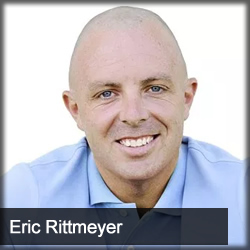

In this episode, Gary Pinkerton shares what he has learned about the complexities of his property managers and the importance of being prepared when you’re considering going into self-management. Then, Jason Hartman interviews the founder and CEO of Cozy, Gino Zahnd. Gino shares how Cozy started, their services, and their goal of becoming the best one-stop-shop for realizing rent payments.
Announcer 0:04
Welcome to the heroic investing show. As first responders we risk our lives every day our financial security is under attack. Our pensions are in a state of emergency. A single on duty incident can alter or erase our earning potential instantly and forever. We are the heroes of society. We are self reliant, and we need to take care of our own financial future. The heroic investing show is our toolkit of business and investing tactics on our mission to financial freedom.
Gary Pinkerton 0:39
Hello, and welcome to Episode 119, Episode 119 of the heroic investing show, where we focus on the unique challenges faced by members of the armed services and first responders, but also those common to all investors. We help provide the tools that enable our listeners to secure their family, their future and their retirement. And we help them put in place a solid plan to replace their w two job or trading time for dollars, as I commonly call it with passive income. My name is Gary Pinkerton. And I’m co hosting this show with Jason Hartman. And today we have Jason talking with the CEO of Cozy.co Cozy.co. Named Geno’s odd. And if you haven’t checked out Cozy, and you’re an owner of rental properties, and you’ve ever really considered doing self management, and I highly recommend it because there’s a couple of really key benefits that you can get from this group. And they come really at no charge. And I would call it like entry level assistance and helping you do self management, you can take this and you kind of combine it with things like homeadvisor and Angie’s List to come up with reputable individuals to help you out on the ground in the local market, assuming you know you’re doing this from afar. But the aspect that cosy does is really helps you with rent collection, and possibly screening of tenants. So it’s very, it’s manual, but it provides a couple things that you don’t have otherwise, for example, a very efficient and dependable way in which your renters can deposit money into your bank account. So it helps with that transaction. Or a lot of my property managers, for example, or requiring people to, you know, come to their office and hand them a paper jack, that just seems really, really inefficient in today’s world. To me, it comes at no cost. I don’t know exactly how close he makes their money on that aspect of it. And maybe they don’t at all, perhaps it’s you know, it’s from advertising and from the other resources, specifically, their their assistance in doing tenant screening. And so if you go to their website, and again, that’s Cozy.co, there’s not a lot of companies out there yet that are using the.co. But it’s becoming more popular. You know, you got.com.net but also now.us is a very popular one and.co is becoming pretty popular, but you go there and you can see that it’s very simple and free to set up the automatic direct deposit process for your tenants to put in the rents. And you can also by the way, use this as a renter, so you could use it to for free submit your payments for rent every month for the property if you happen to be renting. But then you know, they also help with tenant screening, if you choose to do that. And again, like I said, this is fairly entry level, it helps you do the screening process of getting somebody in there and then collect the rent from them. But if you’re looking for more than that, if you’re looking for kind of automating or putting a one stop shop for finding the tenants and doing the actual like house showing, or also incorporating you know, that make readies and things like that or maybe all our car management services in different markets, then, you know, perhaps you want to look for one of the other organizations that we have, you know, either Jason has done in the creating wealth show or maybe that I’ve heard I’ve interviewed here on this show already. And you can reach out to me at Gary at Gary Pinkerton calm, and I’ll get you connected up with the episodes where we’ve interviewed those a little more advanced or a little more involved. Less Do It Yourself type organizations, I’ll certainly get you the podcast episodes and the contact information for them. But this one is of interest, specifically to me right now, because I’m personally looking for some assistance in this area. So Sue and I manage 30 units 20 properties, and we have had those in five different markets. And we happen to have seven different property managers, eight property managers, excuse me, and and certainly we could reduce down at least to five property managers. But without having someone doing it remotely and fairly well involved into it, you’re not going to get below one per market. And what we have found the complexity that comes from having different managers, especially eight of them, is the fact that they all of their documents and their processes are all a little bit different. And I find that extremely confusing, time intensive and frustrating and inefficient. For example, I’ll be working with a property manager is just not aggressive at turning the property. And you know, maybe I’m thinking that the vacancy that’s coming up is in a different property under a different manager who reaches out to me and they’re proactive, then I forget that, and this one’s not proactive, and it goes to the few weeks, you know, completely empty, and they’re just not taking action, right? So that might be a problem where perhaps one property manager has a limit of they can charge $300 on maintenance before they talk to you. And another one, it’s 200, or 500. Or maybe what I’m charging per item and one’s a per month charge. So it gets super complex, no, do they retain the deposit? Or do they send a deposit to you just really inefficient when you’re operating basically, with property managers in different areas that have different rules. So I’m really looking for somebody that Jason Hartman and I have dubbed a real estate portfolio manager. And that person doesn’t necessarily have to be local to me, but I specifically don’t want them local to these markets, I want one person to manage all of them. And to get my property managers in alignment, want them to help me with kind of bookkeeping, but also get the processes happening the same at all of my different areas. And that may mean that I have to leave these property managers, and I’m okay with that. But if you leave the property managers, and you do self management from afar, now, you bring in some extra stuff, right? So you need somebody to do the on the ground leasing for you, you need somebody to actually vet the individuals who are going to do you know, you’re building your kind of Rolodex for it using old term, but building your contacts of trusted maintenance people for different issues in different markets, that’s not hard to do, it just takes some time to do the first time you need a plumber in each market, for example, there’s great resources out there just takes time to do it. So I’m looking for somebody, you know, kind of my own little small family office idea where I have a person to manage, you know, my real estate portfolio. And so I’m, you know, currently kind of researching a couple of internet based services like Upwork, and a couple of others to try to find that. But if anybody out there has an idea, or would like to take that job for me, please let me know, because I’m certainly looking for that. And another thing that sometimes frustrating with these different property managers is they make decisions that are a conflict of interest, and meaning that it benefits them that works against the owner. And you know, here’s an example like getting one year leases instead of multi year leases, that’s a benefit to the property manager. If they’re also making money on the turn, they’re making money on the lease up fee. You know, if they’re getting revenue streams from turning these properties, then it is not in their benefit to do multi year leases. But it’s obviously in my benefit to do multi year leases, because it’s super expensive. I mean, I just got a routine, they called it make ready estimate of 19 $100 for a property that rents for 895. Now, this tenant had been in there a couple of years, but there were no major repairs, or carpet replacements, or anything like that. That’s just what they determined for spot painting. And, you know, re caulking the tub and doing deep cleaning and that kind of stuff. And you know, the problem is, is that your real estate cannot positively cash flow, if you’re going to have, you know, you’re going to pay a month for the thing to be physically vacant while they’re doing this work and get at least up and that’s optimistic. And then you’re paying a month for the lease up fee. And then you’re paying two and a half months worth for this make ready charge. You can’t have four to five months of vacancy costs, or lost rents every year or two and still make the thing cashflow. So need some other options, right need some other options. So I’m looking to have my property managers interests aligned with me. And I think if the guy works for me, that will be by default, you know, what is going on. So very interested in that idea and kind of making that shift to having somebody you know, where they understand their only customer is the landlord is not not the tenant, that in fact, the tenant, of course, is the landlord’s customer, right? Like, my customer is the person who pays me rent to live in my building. My property manager, my portfolio manager, I’m their customer, right? And so sometimes you’ll find property managers who say, well, I’ve got two customers, they gotta walk this fine line sorry that you think that I should have charged the tenant for this. But we work also for the tenant and I just say no, you guys got it wrong. You don’t work for the tenant you work for the landlord landlord pays you it’s very easy to see in life, who your boss is, the person you work for is the person who pays your check. And I don’t understand how property managers get that wrong. The tenant does not pay their check. The owner pays their check, but somehow they use that as an excuse when they don’t look out for the position of the landlord they instead you know, just hand money away to the tenant when it was inappropriate. Because you know, what’s it’s no skin off their back? Right? It’s not it’s not their money. So anyway, some what bad experiences from frustrating experiences recently makes me very interested in things like Cozy and things like having a real estate portfolio managers. And so without further ado, here are Jason Hartman and Gino Zahnd, the CEO of Cozy.
Jason Hartman 9:58
It’s my pleasure to welcome Gino Zahnd to the show. He is the founder and CEO of Cozy. And we’ve talked a little bit about Cozy on prior episodes before. And we wanted to take a deep dive into it, find out what it is find out how it can help you with the management of your real estate portfolio. And especially if you are self managing or thinking of self managing, not going the the more popular property manager route. And we’ve had clients have tremendous success with both of these approaches. Sometimes, sometimes self management, believe it or not, is actually easier than managing your property manager. As I always say, if you have a great property manager, heck, keep them. But if you have a mediocre or a poor property manager, self management really could be a good alternative for you. It’s worked for me. You know, many years ago, as I as I said before, on the show many years ago, if you told me that I could self manage a property that I’ve never seen. That’s 2000 miles away with a tenant I’ve never met, I would have told you you were absolutely crazy. However, I’ve done it successfully quite a few times, and many of our clients have as well. So it is an option. And let’s just kind of dive in and see what Gino has to say Gina. Welcome. How are you?
Gino Zahnd 11:12
I’m doing well. Thanks for having me.
Jason Hartman 11:13
Good. You’re based in Portland. But coming to us from Sin City today, right? Las Vegas.
Gino Zahnd 11:18
I am in Las Vegas today. I am here for the money 2020 conference. And so it’s been two days so far of back to back meetings with folks. And it’s been a really good conference.
Jason Hartman 11:29
Fantastic. Well, you know, what is Cozy? When when you when you give an elevator pitch to someone, you know, just in 30 seconds, what is it?
Gino Zahnd 11:39
Yeah, Cozy is a very simple to use service for landlords, property managers and their tenants to do everything from paying and collecting rent, rental applications, Tenant Screening background checks. And our goal is to be the one stop shop that you can run your rental business with.
Jason Hartman 11:59
Okay, great. And how did you come up with the idea? I mean, I did it. Tim Ferriss is an investor in Cozy, isn’t he?
Gino Zahnd 12:05
Yes, Tim is an investor. And the the idea was born from a lot of miserable experiences as a renter in San Francisco, actually, I lived there and work in the valley for almost 20 years. And the the idea for Cozy really started in 2009. And my business partner and I had had been talking about it for a couple of years. And in 2011, I was moving again and I had filled out the the standard 10 or 12 rental applications that you fill out in San Francisco, and a landlord accidentally ran my credit score six times in three hours. And there’s not a lot you can do about that other than wait for the consequences. And then and then ride them out. And that made me angry enough to think that I could actually do something about it. And so the nutshell of how cosy was born, started there. And we were actually running another company at the time. But I removed myself from the daily operations of that company. And we went, I went into about 40 different markets to just speak to people firsthand. And we wanted to know, you know what tools they used at that point, or, internally, our biggest competitor was Microsoft Excel. It’s a very entrenched tool and the small landlord space. We wanted to understand, you know, where the big headaches were between landlords and tenants, we wanted to understand if there were markets in the US that worked differently, where were they? And why was that the case? You know, for example, we had this perception that in New York City, it would be very difficult to use something like Cozy because there’s such a strong broker presence there. But at this point, we have a lot of customers in New York who screen their own tenants. And we’ve we’ve made all of that very simple. And so that’s that’s where the idea came from. We launched publicly in July of 2013. And at this point, we’re used in over 4000 cities around the country. So every urban area, every suburb, everywhere.
Jason Hartman 14:10
Okay, so for tenants, basically, it sounds like the USP, the unique selling proposition is that the tenant can just go to Cozy when they want to look at when they want to start looking for a new place. And they can fill out one application. And Cozy will be this sort of centralized service that will run their credit report do their background check. And then landlords can just go there and find out what they’re all about. Is that correct?
Gino Zahnd 14:38
So we’re not a listing service. So you don’t come to Cozy to
Jason Hartman 14:42
I know, I know that I know, they’re not I know you don’t have listings on there like Zillow or any or you know any of the other sites or Craigslist, but they can they do what I said though,
Gino Zahnd 14:51
Yeah, so generally the way that it works is when when a landlord is looking for a new tenant, for example, part of the application process that Is the credit report and background check. And so when a tenant is filling this stuff out the it’s just a seamless part of it, it’s not a separate piece. And the beauty of Cozy is that as a tenant, you never have to give someone your social security number. So you pay for your credit report, but you own that data, you control it. And so mechanic the way that works, say that I apply to your place, I would run my own credit report, I would get the results. And I would share those with you as part of my application. So you get what you need, it comes from the Bureau in real time, so you can trust the information. But I’ve never given you anything that you could use for identity theft. So So that’s, that’s how that piece works.
Jason Hartman 15:47
Okay, so it’s good for the tenant in that way. Now, tell us how the landlord uses it.
Gino Zahnd 15:52
So landlord use Cozy and two big ways today. The first piece is with rent payment and collection. And the other piece is our screening tools and rental application. So we make finding a tenant very, very easy, and we make the quality of the data that you get very high.
Jason Hartman 16:10
Okay, so let’s take those in chronological order. Let’s talk about screening. So you’ve got a property that’s up for rent, you know, many of our clients that self manage, they’ll use a real estate agent or a property manager, just to do a one time lease up. Some of them do it themselves to, you know, if they if they’re if they’ve got this one time lease up sort of thing. Can you tell your real estate agent or property manager that I want to use Cozy to screen all the tenants?
Gino Zahnd 16:37
Yes, and that’s actually a very common use case. For us, we have a lot of listing agents who only use our screening tools. And then when it’s time to just start collecting the rent on a monthly basis, and we’ve automated all of that, then the landlord can just set up those payments and the payments go directly from their tenant to to whichever bank account they want it to go to.
Jason Hartman 16:59
Okay, so what do they do? Tell us exactly what happens. So the tenant comes in expresses interest in the property. And then what?
Gino Zahnd 17:05
Yeah, so there are a number of ways that, that people use Cozy in terms of where they come into the product. So on the tenant piece, if I’m looking for a place, I can take my my Cozy property, and we give you a unique URL for the application for any given property. So I can put that that link in my Craigslist ad or my Zillow ad or wherever I want to market it, tenants can simply go to that link and apply and they can apply from their phone.
Jason Hartman 17:38
So so you there, there’ll be a link, there’ll be a link, and you can put that link on a Craigslist ad. You can put it in postlets, Zillow, wherever you’re listing the property right, that says, If you like this property apply here. Is that how it works?
Gino Zahnd 17:51
Yes.
Jason Hartman 17:52
Okay. And then and then the tenant goes and applies, and how much do they have to pay for the application fee.
Gino Zahnd 17:58
So there, there isn’t an application fee, we have decoupled the idea of a fee from the application. So most landlords do want a background check and a credit report. And we that’s the default setting. So if if the tenant does need to pay for that bundle, it’s 3495. If they just need to buy a credit report, or a background check, those are 1995 each. And as I said before, the tenant controls that information, and never has to share anything that can be used for identity theft. And so it’s free for the landlord, the tenant pays for it, but they they have control of that. And so in the very rare cases where a landlord or property manager are just accepting applications, there’s no fee for the application itself.
Jason Hartman 18:45
So there’s no fee for the application. Now, landlords usually make a little bit of money off the application. Okay. I mean, they have to spend their time. So it’s a fair, you know, I guess it’s a fair request. But for example, you know, a landlord might charge a $25 application fee for each adult occupant in the house, right? So if it’s a husband and wife, it’ll be $50. If it’s just one party, it’ll be $25. But then they’ll go and they’ll run the background check. And that will only cost them maybe 10 bucks. What happens with Cozy? Can they still do that? Or does that opportunity gone? And I’m calling it an opportunity, because, you know, they do make, you know, it’s a nominal amount of money, but
Gino Zahnd 19:23
It’s icing. And so, so Cozy is completely free. And we take the burden of actually dealing with the applications from from the the landlord, right. So we did a lot of early homework on this because we as renters had experienced the wonderful and mysterious application fee. And what we learned is that when and we asked about 3000 people around the country about this, specifically about why do you charge an application fee and if so, why? And the Oh whelming majority of respondents to that survey told us that they use the application fee simply to go pay for a background check and credit report, less than 5% used it to collect an additional fee from their tenant. And so we made the decision early on to just remove the concept of an application fee and only have tenants pay for the things where they’re actually acquiring data about themselves to apply to a place. And so you know, we’ve been in business for two years now. And I think we have had maybe three or four people over the course of our history at email to ask, Hey, how can I charge a tenant an extra, you know, 10 or $25. And so
Jason Hartman 20:50
There’s actually kind of a little other benefit to the landlord. You know, if the tenant pays something, even though it’s a nominal fee, like 25 bucks, you know, it sort of makes them more committed to the property, if they’re out looking at, you know, two dozen properties and plying everywhere, you know, they kind of feel like they’re really sort of into it, if they gave you 25 bucks. So you know, look at a non landlords making money off application fees, okay, they have to spend a lot of time screening the tenants and so forth. But, you know, certainly institutional apartments do this. And it’s probably a big business for them. Actually,
Gino Zahnd 21:22
Yeah. But but to your point, the way that we’ve designed it is that the, the tenants who really want a place are going to purchase their their credit report and background check. And so that just the design, the way that we have designed, the software, naturally causes the higher quality tenants to bubble up to the top if you are getting multiple applicants for a property. And so to your point of, you know, it weeds out the people who the application fee weeds out the people who are not interested, we still do that. But what is attached to that is high quality data, rather than reduce intent.
Jason Hartman 22:02
So how do you make money? I mean, because you’re we got to get into the thing about the monthly rent processing. Okay, I don’t want to spend too much time on this. But how does Cozy make money?
Gino Zahnd 22:11
Yeah, so we give away the core tools to landlords and property managers. So the application and screening tools and acgh payment, and collection tools. And today we have two revenue streams, one is around credit reports. One is around background checks. So today, that’s currently how we make money. In less than a month, we will actually start allowing tenants to pay rent and other things like utilities with debit and credit cards. And so we’ll start actually monetizing the very large amounts of money that we move every month. And then there there are things coming, but those are those are the three that are immediate.
Jason Hartman 22:54
So anything more you want to say on screening just quickly, and then let’s move on to monthly rent collection.
Gino Zahnd 22:59
Yeah, let’s move on.
Jason Hartman 23:00
Landlords collect rent in various ways, you know, good old fashioned, send me a check. And then the tenant says the checks in the mail. As the old saying goes, my mother self manages all of her properties, I call her kind of an extreme do it yourselfer, she’s sort of a little too much on the Do It Yourself side for sure. And I’ve had her on the show a few times to talk about it. And she just has the tenants deposit the money into her bank on the first of the month. And boy, she is like a hawk. At the end of the day, on the first of the month, she is looking at her bank and making sure all those deposits were made. So the tenants it’s their responsibility to just put it into her account. And so you know, you can do it that way. There are a couple other payment processing things. But the problem is with other payment processing systems, is of course, you know what I’m gonna say they charge a fee. And that’s okay, when the transaction is 20 bucks. But you know, when it’s 15 $100 a month, or, you know, even worse than the Socialist Republic of San Francisco, you know, then it really adds up. It’s a lot of money.
Gino Zahnd 24:01
Yes. So we have aggressively negotiated our acth payments, which is, you know, direct from one bank to another, to a point where we feel that it’s a great value to just offer that service for free to both landlords and tenants. And, you know, today we move about a quarter billion a month, sorry, a year, and that’s growing in 2015. That’s been growing at about 140% every quarter. And so that’s, you know, volume is one way that we make that free. And as I just mentioned, we’re actually getting ready to roll out the ability for tenants to pay with debit cards and credit cards and there will be a convenience fee associated with that. But the cool thing about cards is that if a landlord also wants to use a debit card, we can actually use make those payments almost instant. So if a tenant pays with a debit card, we can then almost immediately push that money to the landlord’s debit card as well. So that’s something that’s coming that we’re super excited about. The other thing that is much better about Cozy than
Jason Hartman 25:17
I have, I have a question for you. And you know, you know how in life, we have these things that we just sort of take for granted and never question. And and some of them are acronyms, abbreviations. Do you know what ACH even stands for? I mean, I know what it is. But I don’t even know what it stands for. Is it like automatic cash transfer?
Gino Zahnd 23:58
Its Automated Clearing House.
Jason Hartman 25:39
Oh, thank you.
Gino Zahnd 25:40
Yeah. And actually, we have on our website, there, there’s a link. I think it’s Cozy.co slash a CH explained. And don’t quote me on that. But it’s something like that, that where we actually explain what happens to your money, when it leaves your bank account and then goes into the Federal Reserve. And then it goes through a couple of processes before it actually ends up in your landlord’s account. But yes, the Automated Clearing houses the the service that our federal government built decades ago, and it’s the, the the rails on which all United States payments still run. And unfortunately, we were all still beholden to, to their rules.
Jason Hartman 26:28
Okay, so, so Cozy, can process payments for free? Is that
Gino Zahnd 26:34
It costs us a tiny amount of money. But it’s, it’s worth it for us to offer that service for free to, to our customers.
Jason Hartman 26:45
Wow. Okay, so you’re, you know, it’s kind of like saying, we lose money on every deal, but we make it up on volume.
Gino Zahnd 26:51
Well, yeah. And and, you know,
Jason Hartman 26:53
I’m joking with you, obviously.
Gino Zahnd 26:55
Yeah, yeah. Sure.
Jason Hartman 26:55
Well, not really.
Gino Zahnd 26:57
Well, I, you know, there there are, it’s certainly a loss leader for us. But it’s, it’s a very sticky product, and it’s a product that works very well for people. And, you know, when you when you open to the show, and you were talking about being 2000 miles away, we actually just a few hours ago, got a comment from a customer who’s in Saudi Arabia at nine time zones away from his three rental properties. And he was he was raving about how much better Cozy his has made his life. And so it’s, you know, it’s, it’s, it’s worth it for us to provide that because it’s such a sticky service, and people do need to screen tenants. And, you know, soon we’ll actually start monetizing the rent payments, by allowing tenants to pay with cards. So So it’s, it’s worth it for us.
Jason Hartman 27:45
Okay, so So how does it work? What happens? I mean, what, what, what, what is the landlord do? And what is the tenant do to make this automatic payment happen?
Gino Zahnd 27:52
Yeah, so there, there are really two ways that a landlord would initiate payment. So either I, I, as a landlord just found a new tenant through Cozy and now I’m getting them set up on payments. A more common case for us actually, is, people already have tenants, and they discover Cozy and they say, you know, oh my gosh, this is just so much better than rent checks, or PayPal or direct deposit or, you know, however they’re doing it. And so they just onboard their current tenants to start using Cozy to to pay and collect rent. And so the way that it works is, I, let’s say that you’re my tenant, I simply set you up in Cozy, which takes 30 seconds, you know, I enter your email address, and a little bit more information about the property and I essentially just send you an invite, you get an invite that says, hey, Gino is setting you invited you to pay rent through Cozy, and you go through a process, we verify that you are in fact who you say you are, we verify that you in fact own the bank account that from which the money will be withdrawn. And it’s it’s that simple. And then once it’s set up, it just runs automatically every month, and we do a very good job of notifying both the landlord and the tenant. You know, hey, rent to do in five days, just a heads up. And then the day that the rent is pulled, we we let you know. And then we also let your landlord know hey, the rent on its way. So your mom actually wouldn’t need to go eagle eye her bank account because she would get a notification on her phone or email wherever proactively that just says, Hey, your tenant at this property has paid their rent, you can expect it in the next three to five days.
Jason Hartman 29:41
I just keep thinking what is your ultimate goal? I mean, look, there’s no shortage of tech companies in the world who never had a penny of revenue or either that either the either no revenue or certainly no profit, yet they’ve sold for a gazillion dollars to another company. I mean is that your plan with cosy. Are you just looking to get traffic and eyeballs? Or? Or do you really have a revenue model here? I mean, it sounds like you charge for some things. But I don’t know, I can’t imagine it’s, you know, how much do you charge for whatever you charge for?
Gino Zahnd 30:13
So to answer your first question, what our goal is, our goal is to build the best one stop service for anyone to run the rental business. And that means if you have two properties, or if you have 2000 properties, we want you to be able to do it soup to nuts with Cozy. So that’s, that’s our goal. Now, the the exit, which I think is what you were implying, is is really not relevant or of interest. At this point. We’re, we’re growing fast, we’re making money. We’re, we have a lot of new revenue streams lined up. The next one’s getting ready to launch in November. We have
Jason Hartman 30:54
So, top secret stuff, they’re probably
Gino Zahnd 30:56
Well, no, the cart card payments that I mentioned. So okay, that’s, that’s coming. And you know, given the volume of cash that we move every year,
Jason Hartman 31:04
It’ll be significant. Okay, good.
Gino Zahnd 31:06
The things that we’re looking at in the future without giving too much away. Everyone needs renter’s insurance. Every every small rental owner needs liability insurance. And the adoption rates of those things today are abysmal. And we have a really huge opportunity to make a positive impact and those kinds of things as well. So there, there’s absolutely a business here, and it’s growing very well. And you know, what, what the, the long term goal is to build the best product that we possibly can and have a massive swaths of people not only in the US, but around the around the world, using our product to the point where if you took it away, they would say How the hell did I get this done before.
Jason Hartman 31:59
Right. Yeah, That’s awesome. This is just a great tool. I mean, do you have a competitor? Or is it just this is pretty much kind of a new, I mean, of course, you have services like PayPal, Venmo. There are others, but it’s not designed for landlords. And of course, you’ve got those pesky fees? Of course, you can get around that with PayPal, if you say it’s for a friend or relative? I don’t know, you know, not really solution, right?
Gino Zahnd 32:21
Yeah. So when we started out, we were very much the the lone few people in a canoe in the middle of the ocean, there were no competitors. Historically, no one had ever designed a product for the the sub 20 unit, you know, independent rental owner market. And, you know, the interesting thing is, is that that sub 20 unit building is actually about 75% of the US market. It’s I mean, it’s the huge majority of rental properties in the US. And the reason that no one had ever done that in the past is that it’s such a fragmented market. There, you can’t hire a sales force and, and call everyone, right. And, you know, luckily, now that we have things like your show that we’re doing right now, we can get in front of people. But there have also been a number of things on the internet that have has allowed cosy to get in front of the right people at the right time, where historically that just wasn’t possible. Now, since we have launched, there are a lot of copycats. And I you know, I think it’ll be interesting to see what happens over the next five years to see where where the industry lands, because what’s happening with Cozy is that while we very specifically designed the v1 of the product for the smaller independent rental owner, professional property managers have heard about Cozy as the brand has grown. And now what’s happening with us is we’re being pulled up market and we have more and more customers that have you know, 200 units or 1500 units. And so we’re we’re very quickly designing the product to also handle the kind of scale that they need to deal with and the headaches that they have while maintaining continuing to grow the audience that we that we started with, which is our bread and butter. So you know, it’s still fragmented. A lot of companies are coming at it from a lot of different angles. But look, it’s a it’s a huge market and, and Cozy is we’re excited about where things are headed right now.
Jason Hartman 34:32
Yeah, I’m excited to I’m excited to see that there’s a service like this out there. And you know, look forward to seeing you know where it goes. It’s sorely needed. Anything else you want to say of course the website is Cozy.com
Gino Zahnd 34:45
it’s actually Cozy, co Cozy.
Jason Hartman 34:48
Oh, thank you. So you use the Colombian domain extension. co huh
Gino Zahnd 34:51
It’s more and more common.
Jason Hartman 34:53
Yeah, I’ve noticed that.
Gino Zahnd 34:55
You know, it’s interesting. We we started there and a lot of people just call us Cozy co now which is kind of kind of cute. And it’s it’s okay with me.
Jason Hartman 35:04
Sure, yeah. Good good stuff. Anything else you want people to know, maybe you know, a question I didn’t ask you or just anything?
Gino Zahnd 35:11
Well, we’re the rest of 2015 is going to be super exciting for us where we just launched a new mobile web app for landlords. So you can do almost everything on Cozy on your phone or tablet. Now. Over the next eight weeks, we’ll be rolling out a number of new features for both landlords and tenants around around payments and listings management. And we’re also in two weeks announcing a big partnership. And I wish I could tell you what it is. But I would encourage people to just follow us on Twitter at Cozy Co. And we’ll be making that announcement there.
Jason Hartman 35:48
Fantastic. Well, Gino, thank you so much. You know, one, one thing I just did want to mention to investors, you mentioned fragmentation. And you may want to speak to this, by the way, and I always say to investors embrace the fragmentation. Because the fact that you have that fragmentation, that’s what keeps the big institutional players out of our business in the, you know, in the small rental business. So, you know, you see some hedge funds and some private equity groups, you know, kind of dabbling and, you know, when I say dabbling, you know, I mean 10,000 units, but
Gino Zahnd 36:22
Right. Dabbling on the order of billions.
Jason Hartman 36:23
But by their perspective compared to Wall Street money that is dabbling. Okay, you know, it’s not, it’s not, you know, Goldman Sachs type money, but that keeps them out of our game. So you know, you got some tools like Cozy and some other great tools that we’ve talked about on prior episodes out there. And, you know, it’s just, it’s the most historically proven asset class in the entire world if you asked me so. This is great. And thank you for doing what you do. I just think you know, there’s some great tools like yours out there, so investors, please check them out. Take advantage of them.
Thank you so much for listening. Please be sure to subscribe so that you don’t miss any episodes. Be sure to check out this shows specific website and our general website heart and Mediacom for appropriate disclaimers and Terms of Service. Remember that guest opinions are their own. And if you require specific legal or tax advice, or advice and any other specialized area, please consult an appropriate professional. And we also very much appreciate you reviewing the show. Please go to iTunes or Stitcher Radio or whatever platform you’re using and write a review for the show we would very much appreciate that. And be sure to make it official and subscribe so you do not miss any episodes. We look forward to seeing you on the next episode.
No related posts.