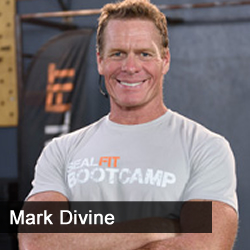
Jason Hartman welcomes Mark Divine to the 10th episode of the show. Mark is a Wall Street worker turned Navy Seal and is the author of The Way of the Seal. He shares his work experience and the business environment on Wall Street, which is not for everyone. Mark explains the importance of striking a balance between your own personal, spiritual and emotional being and why it’s beneficial to think about why you do what you do to add value to society.
Announcer 0:04
Welcome to the heroic investing show. As first responders we risk our lives every day our financial security is under attack. Our pensions are in a state of emergency. A single on duty incident can alter or erase our earning potential instantly and forever. We are the heroes of society. We are self reliant, and we need to take care of our own financial future. The heroic investing show is our toolkit of business and investing tactics on our mission to financial freedom.
Gary Pinkerton 0:39
Hello, and welcome to Episode 100 of the heroic investing show. That’s right, awesome listeners. This is the 100th episode of the heroic investing show, where we focus on challenges both unique to military, retirees, first responders, firefighters, police officers, and EMTs, but also those that are common to all investors, we aim to help our listeners improve their lives, improve the experiences with their family, and most importantly, help them get a path with some passive income, so that they can launch into their entrepreneurial world of adding value by sharing unique genius with the rest of the world. And hey, if that unique genius comes from being an entrepreneur, not an entrepreneur, then all the better, but at least you’ve figured out a way to add maximum value and share your best talents, even if it’s somebody else’s company. And you’re just someone who’s making a huge change with their company. Either way, your company their company, it’s my goal, that I can help you with enabling tools, advice, and most importantly protections and financial resources so that you have time to focus on those things, and not how you’re going to pay the bills. And what would happen if something happened to a breadwinner member of the family. So on this 10th episode, because it was the 100th, I knew that, you know, I worked pretty hard to try to figure out one that certainly went into this broader life benefit that we do on 10th episodes. And for me, you all know that that is going to fall into the personal development, self improvement, just you know, get yourself excited and efficient to share genius with the world kind of mentality. So that’s really my theme, as I have been selecting these different 10th shows or 10th episodes. But on the 100, I raised the bar a little bit more and said it had to be one of us, it needed to be someone who met the criteria of someone that would be a good fit as a member of the audience of the heroic investing show.
Gary Pinkerton 2:48
So I have two branches, I guess I would say are two elements of the Navy. I was trying to make that broad for all of the services. I know in the army, we talked about this as MLS, but you know, what I’m trying to say is two different sections of the Navy. That really, really appreciated I have the highest respect for and I should say Department of the Navy, because one of them is US Marine Corps. I have some very, very good friends who are Marines. I think that they just inspired me. They’re they’re esprit de corps. They’re small unit, cohesion, family atmosphere, you know, mission will always get done right. And we leave leave no one behind. Well, the group that obviously is very close to that. But with a little bit different spin is that are the navy seals, again, some very, very close friends, a roommate of mine went navy seals, just you know, had a reunion recently and all the guys from my plebe year accompany at the Naval Academy. I was just humbled by the, you know, six 810 deployments that these gentlemen have done, you know, bottom line, Marines and navy seals, pretty inspirational in my world. And I think they are just about everyone’s world that they touch. So hats off to two individuals who choose that calling. And this gentleman is no different. Jason is going to talk with Mark Devine, they’re talking about inner strength, basically, about the incredible benefits and performance improvements. That even the highest achievers can get the use of visualization. And Mark is author of a book called well, several books, but the probably most notable or most recognizable is one that’s titled unbeatable mind, the way of the seal. And in this, he talks about the visualization like he does on this discussion, but it’s a technique that elite athletes have been using for the past several years. I’m not sure exactly how far back this is this popularity, or at least the recognition of how powerful it is. But I do know that Olympic athletes, you know, like an Olympic gymnast who goes through the routine, every minute detail in their mind over and over and over again right before the event. So that when the Plain and out in real life, it’s just a repeat of what their mind has already convinced them is going to happen all the way up to the point of standing on the podium, you know, and getting the gold medal. And you’ll see the same thing like, you know, race, professional racecar drivers will go through the entire course, over and over again, in their mind, feeling every corner feeling, you know, passing cars, etc. So, you know, it’s been a very successful thing for elite performers, whether it be in sports or in business, it’s also you know, kind of moved into, for example, professional speakers, we’ll go through the entire event, you know, talking, you know, talking through telling their jokes, or whatever they’re doing, right, making their points. And, you know, hearing the crowd roar in their mind, so that, you know, they’re prepared for that successful step before they even you go in and do it actually, in real life and in front of other people. So I thought that was a really, really good discussion. And I really think you’re gonna like a lot about this one. But before we go there, I wanted to touch briefly on two topics regarding the venture Alliance mastermind. As you know, as a founding member of that, love that organization, I gain great value from it every time I go and get around people like that, you know, remember the advice, you know, from Jim Rohn, you’re the sum total of five people that you spend your most the most time around. And there’s some really good people that you can choose five from individual lines, mastermind, or any other mastermind operating on an elite level like that. So the first comment I was gonna make is that Jason and I are talking about a way to offer a special membership option that fit the heroic investing shows primary audience, so I’m talking about is, you know, the firefighters, the police officers, the EMTs, those that are, you know, titled first responders that performance first responders, as well as active duty military members, I think we’ll probably keep it to only those that are actively performing those jobs, not to retired members. And so some of the things we’re talking about is, you know, perhaps a little bit more maybe it’s it’s one event a year instead of two to better kind of mix with your busy life and you’re deploying in life. Obviously, we’re looking at a way to reduce the membership fee each year similar to what Jason has done with the junior member program for younger individuals who are joining up provincial Alliance. So that was the first thing is, as I wanted to ask if any of you could please provide me your thoughts and input on that. And you can do that very easily by just sending me an email to Gary at Gary Pinkerton, calm, that’s Gary at Gary Pinkerton calm. And then second, the next upcoming if you leave the additional optional Icehotel event off of the, you know, the roster, then the next planned upcoming venture Alliance mastermind event is right in my backyard here on Manhattan, New York City coming up at the end of May. And I don’t know that Jason’s got the dates, but it’s real close to Memorial Day weekend, it’s going to be epic. This is going to be a really good one, I think you would really, really enjoy this. So all of you who are on the east coast and haven’t made that that jump, that leap will save you some travel costs. Come Come join us over here in New York City. And maybe you can figure out a way to get you down to our home and spend some time on the beach with us here. So listen, without further ado, I think you’re really going to enjoy this upcoming show. So please join me, you know, have a seat listening to Navy SEAL Mark Devine.
Jason Hartman 8:25
It’s my pleasure to welcome Mark Devine to the show. He is the author of a few books, but his latest is entitled The Way of the seal. And it is a practical guide for business people, athletes or anyone who wants to be an elite operator. I love that, by the way, in elite operator in his or her life. Let’s dive in and talk about how we can develop mental toughness resiliency, overcome odds and a little bit about Wall Street because Mark had a wall street background before joining the navy seals. Mark. Welcome. How are you?
Mark Divine 8:57
I’m doing terrific. Jason. Thanks for having me on the show.
Jason Hartman 8:59
Yeah, it’s great to have you. So first of all, since I left off with that wall street thing, maybe let’s go in chronological order. You worked on Wall Street two, you were 26 you were a CPA. You had an MBA, right? That’s right. Yeah, I
Mark Divine 9:11
follow the herd from my undergrad School, which is Colgate University in upstate New York, down to Manhattan. And then I got hired by initially Coopers and Lybrand, which is now PricewaterhouseCoopers. then two years later, I made a switch over to Arthur Andersen and all this is interesting. My clients included Drexel Burnham Lim bear, Salomon Brothers painewebber. These are companies that you know, we did audit for and special projects. And my firm was Arthur Andersen and none of those companies are in existence anymore for various reasons, and some of them not good. So why
Jason Hartman 9:41
did you leave Wall Street? You know, I always called Wall Street, the modern version of organized crime. Some are welcome to disagree with me on that, but it’s just so riddled with corruption. It’s amazing what inspired you to leave and join the seals. I mean, that had to be a huge pay cut.
Mark Divine 9:57
You know, it was there’s a few things that were going on. One was that I just had this kind of increasing sense of dread that I was in the wrong place and doing the wrong thing. And that I was just not cut out for that kind of clawing my way up the corporate ladder, in particular, in that environment. Now, my family had a family business in upstate New York. And so they thought it was just brilliant that I was getting my MBA, and I was going to be a CPA, and getting some great work experiences, because my father thought, well, that would be a good foundation for me to come back to the family business. And I didn’t really see that path very clearly. So I was trying to carve out a life and maybe shift over to investment banking, or chasing the big money at the time. And like I said, Jason, I just had this increasing sense over the first couple of years while I was down there, that it was just the wrong path for me personally. And to emphasize that or to make it even more painful, I did notice and was kind of disgusted by the greed and the lack of like, authentic leadership that I would say, on the street. You know, people were really, you know, for themselves, they judged each other by the size of their paycheck and their bonuses. And they were really kind of nasty to each other. And that just wasn’t the way I was brought up. And it just didn’t seem real to me, right didn’t seem authentic. And so I didn’t want to be part of that. One last real quick story that the straw that broke the camel’s back for me was, I had a small client who was not financial, and I got sent out in this special project in Long Island, because this subcontractor to Boeing had been caught up in what was then called the influence peddling scandal. And so it was you know, crony capitalism at its best. And essentially, this poor guy was a good target for the IRS because you know, they weren’t going to go after Boeing, they were going to go after the small subcontractors they can reach out and touch. And so the IRS was brought in. And then they brought Arthur Andersen in to audit this small paper company that made boxes for like, jet engines and stuff like that, which should have been a three week job. And sure enough, like six months later, we were still sitting there were literally just sucking this company dry financially. And it was all a big, you know, I looked at as a big scam, I said, You got to be kidding me. No, we could have done this project in three weeks or four weeks. And because the IRS was involved, Arthur Andersen had government behind their back, and they just kept on sending us out and kept on billing us and creating reasons for us to be there. And the company almost went under and the poor owner, Mr. Kane, contracted cancer during this time, and literally passed away. And I was so disgusted by the whole environment, and by you know, what we call business down there. And I said, screw that. And so literally, during that time, I was looking at the navy seals and considering a radical change in my life direction, and I said, Okay, this is it. And so I went back to my office and quit. And just going for and started training for the seals,
Jason Hartman 12:57
we won’t harp on the wall street topic. It’s just interesting, because so many of my shows are financial shows centered around personal finance investing. And one of the things I recommend people is I have these 10 commandments of successful investing. commandment number three is thou shalt maintain control. And I recommend being a direct investor, because then you don’t leave yourself susceptible to the three major problems when investing number one, you might be investing with a crook. Okay, certainly, you bet a few of those on Wall Street, I’m sure. And then number two, you might be investing with an idiot. There’s probably not too many idiots on Wall Street. They’re just mostly crooks yet to worry about. They’re pretty smart people.
Mark Divine 13:35
There’s a lot of crooks are idiots too. So those two almost go hand in hand.
Jason Hartman 13:38
Oh, okay. All right. And then number three, assume they’re honest, assume they’re competent. If you get past those two hurdles, they take a huge management fee off the top for managing the deal. The bonuses that these investment bankers get that the market makers get that the CEOs and the boards of directors get. It is obscene. And that’s all legal, by the way. It’s just crazy. And why is it that people like you said people were nasty to each other? And what is wrong with that culture? There’s so much money to be made there. They’re just like competing for almost no reason. It seems they’re all probably pretty wealthy. And what more do you need at some point?
Mark Divine 14:21
You’re right on Jason. But I think it’s a systemic problem. And it really has to do with our whole cultural story and the way we’ve organized our economy. And it essentially pits everyone against each other. And based on this story of separation, where I’ve got a, you know, I’ve got to get mine and a lot of times I’m going to get mine at the expense of yours. Right. So Wall Street is pure financial manipulation and happens to be these organizations and supported by and encouraged by the Federal Reserve and the basic economic structures. When you move money around and you can set your own pay scales and you’re not really contributing any value. It’s a, it’s a pretty easy way to make money. And so you have, you know, very aggressive and highly intelligent individuals who figured this out, and are able to go be part of this whole kind of overlay to our economy that doesn’t really produce value, but just shifts funds left and right, and here and there. Right, right. And it’s just, you know, scrapes enormous and inordinate share off the top. Yeah, this speaks to kind of the values that I try to put out in the way the seals, like, Why do you do what you do? And if it’s just to, you know, move money into scrape money, then that’s just, that’s just flat out wrong. I mean, there really should be even no industry, where that is your purpose, right, just to accumulate wealth, just for the sake of accumulating wealth that doesn’t add any value to society. It’s like the lowest form of you know, can be considered one of the lower forms of work, because there’s no honor. Right? There’s no personal integrity, there’s no growth and development as human being. It’s all based on separation, what’s mine is mine. And that’s what I was experiencing. You know, I didn’t have those words for it. And I just felt like it was wrong, and it was corrupt. And it was bad. You know, as a five year old. I think that we’re we’re moving towards people are realizing that a lot of kids and millennials these days are saying, you know, what, what am I really meant to do? What is my purpose in life? What am I passionate about? I’m not saying that finance isn’t important, but like you talked about, if you’re in to numbers, and finance, and you want to help mark or Jason, protect your future, and you’re going to be the best financial adviser that you could possibly be, and then walk your talk and live in integrity, and you’re going to earn a fair wage, or a fair salary for managing someone else’s money, then I’m all for that. I think that’s brilliant, because I need experts like that, to help me on this, do you. But in the big financial manipulators, I think, you know, everything is just gotten too big. And when you’re too big, including our government, when you’re too big, you’re completely disconnected from what’s real, and what’s important, and you make decisions based upon those who can influence you the most. And that’s what’s happened to Wall Street into our government.
Jason Hartman 17:08
It’s a sad state of affairs, the government has over 20% of the economy now, which is absurd. The government should be so large, but it also on Wall Street. It’s just amazing. Like I call it the smoke and mirrors economy. And then there’s the real economy. And like you said, it’s this financial overlay to our economy, that just sort of moves things around and doesn’t actually create anything. And all these smart people have figured out how to manipulate that system and, and make money from it. Yeah,
Mark Divine 17:36
it’s created a huge systemic risk and put the entire economics foundation of, I think, the country at risk, and the world of the world yet. So I think it’s still, you know, the 2008 crisis and the response to it with Dodd Frank’s and these banks that were too big to fail, have gotten bigger, and are now really too big to fail. And they’re really, and they’re being kind of puppet mastered by the government, the whole thing is actually gotten more risky. And I think that there is a point in time where it won’t work anymore, right. And so I read a stat the other day, that over 40%, of Fortune 500, companies will be out of business. Within five years, I can’t even comprehend No kidding. And they know it right. And they know it, and I got a call by Cisco, Cisco wants me to come in and do some, some leadership instruction, you know, speaking, consulting, whatever, say, they realize that they need to move so much faster, and to make some grow the coneys to make some radical changes. Because when you can have small companies, you know, like WhatsApp, who can grow up with three or four people, 10 people, whatever, and create a billion dollar market cap within one to three years.
Jason Hartman 18:48
Yeah, and 19 billion, ultimately,
Mark Divine 18:50
Totally, yeah. And so all of a sudden, we have this convergence of technologies that are happening, they’re all going to come together in the next five to 10 years, robotics and AI and 3d printing and sensor networks and global perpetual Wi Fi, high speed internet access,
Jason Hartman 19:08
which is going to put, you know Wi Fi, cell phone, Wi Fi, weather balloons connecting the whole world, the rising billion will be online. I mean, it’s an amazing time to be alive,
Mark Divine 19:17
you’re gonna have another 3 billion coming online through mobile devices. And so the old way you literally everybody with 3d printing could be their own personal manufacturing plant. And so now you’re gonna have distributed global distributed manufacturing, global distributed distribution. And anyone who’s a big company has got to be shitting their pants right now,
Jason Hartman 19:37
what’s happening here is we look at how the internet has changed the world. So it democratized publishing in the 90s. where, you know, I remember when I wrote my first book, I put it on amazon.com it was midnight, it was self published. It took me seven minutes to reach a global audience. Now granted, maybe, maybe not many people will buy it, but it is there. Okay. And I didn’t have to go through again. Keep her I didn’t have to get a literary agent to like me. And that me with podcasting, we’ve democratized publishing in terms of radio and video, YouTube, etc. And now what’s coming next is we’re democratizing manufacturing with 3d printing, and it’s gonna move right down to the desktop, just like the information revolution did. It’s an amazing time to be alive. But this might be a good segue to really the topic. Okay. Which I’m sure you want to get to. Yeah, yeah,
Mark Divine 20:29
I love talking to you, it’s great. in the way of the seal, you talk about being an elite operator. And with all of this phenomenal technology, we all have access to this nowadays. And that is great. The opportunity is there. But one of the things we’ve got to do to maintain an edge is to manage our mental state, and to manage our physical state to and really being that elite operator, I mean, what are some of the things that you learn from the seals that you talk about in terms of doing this, I’ll create a little bit of a bridge by just saying that, with all this change, that’s gonna happen, right? It’s very exciting. But obviously, there’s gonna be a lot of disruption, a lot of chaos, and a lot of carnage, you know what I mean? Like, you see what’s happening in Iraq, and with ISIS and Ukraine, and all these big institutions, whether you’re talking about governments, between, you know, the state boundaries, and governmental institutions, or whether you’re talking about large international corporations, they’re all going to face systemic shock and breakdown. And, you know, in the interstitial period between, when the old breaks down, the new kind of arises, have this void. And that’s when gunslingers step up, and the warlords and you know, whoever’s got the biggest biceps, and the biggest guns really wins in those times. And so a lot of people are coming to me these days in my training and say, you know, what, I’m a little scared, how can I step up my game, so that I can not only think faster, move faster, be more in control be see things a little bit more clearly be more aware, but also take care of business, if I get into a risky situation, you know, defend myself, and they’re all linked, and they’re all tied. What I learned in the seals was that we have so much more potential than we allow ourselves to tap into. And when I grew up in upstate New York, I was kind of an average kid, I was a B student at Colgate University, but I was an athlete. And that was kind of my saving grace and middle, you know, allowed me to go into the seals and being a seal. But it was the mental training that I started prior to being a seal that I learned through a very, very enlightened martial arts master who lives in New York City, his name is Michael Moore. And he started me on this path of mental development that was different than what a typical Western kid is exposed to. So you know, at 21, I was meditating and concentrating on really interesting concepts, learning to visualize and to develop my visual acuity. And working on breathing practices that we’re going to supposed to be developing my internal power, focus, all of these things were just not taught to anybody unless you happen to stumble into someone like this rare individual. And so I was trained in these techniques, and I trained with them for about a year to a year and a half before actually getting accepted into the seal program. This is during that period rice that I just went up and quit. That was about six months before I was even accepted to go to the seals. But when I got to seal training, all of a sudden, I just saw it. I mean, I we had 180 people in my SEAL training class in 1990. And 19 of us graduating, that’s how hard the training was only 19 made it through this six month a crucible. And I graduated his honor man number one of my class, because of the mental the mental game was I was completely locked on. And I was like, holy shit whenever Naka Mora taught me works. And so I kept on focusing on that now the seals didn’t teach this stuff, they are starting to now it because it’s a government organization, it takes a while for them to get it. At the same time, a way that the seals, train and operate had a lot of parallels. And so it developed the same type of person without the actual, hey, do this meditation practice. So what I mean by that is, we spend a shit ton of time in silence right now this is one of the key things that leaders need to learn how to do is to stop being so busy defining equal period of non action to complement their action. And now it seems you think we’re doing all this stuff and all this training, but the reality is we have a pretty narrow range of missions, we know what to focus on, and how to get those jobs done better than anyone else in the world and we try to stay focused on them. So in the training, like so we might have a three week training period where we’re going to go learn how to, we’re going to master our shooting. We go on, shoot for like six hours straight, and then we go back and we’ll take a long break and during that break time we just rest. You don’t I mean, we just rest, we allow the trading to sink in, we may read, we may kind of digest it, it also, you know, might be a little hot outside. So we’re not, you know, we don’t want to be out there until the day before rest, we’re restaurant mind, rest of the body. And then we’ll also spend time in thinking and planning and classroom. And we also spend time moving our body. So always make sure that we’re getting a good workout in every day, sometimes two or three times a day. And then the other thing that’s really cool, Jason is everything we do we do as a team. And so when you do things as a team, right, you’re holding yourself to a higher standard, you know, a really great team will elevate you and you’ll grow a lot faster as a human being. And a shitty team can actually hold you back and bring you down and people have experienced that you know, when they’re on a good company team are shitty competing. So here’s what I’m boiling this down to is that some of the things that I learned through my mental training with Nakamura, we did naturally in the seals, we spent a lot of time in silence has been a lot of time contemplating, we spent a lot of time working and controlling our breath. When you’re on a sniper rifle. And you’re ready to take a shot. They teach us breath control and tactical breaths, slowing your breath down, breathing slowly to account for into your nose slowly to kind of four out to your nose. And that breath control is the bridge to mental control. And then with a mental control, we learn how to maintain Front Sight focus, which is really radically focusing on the front sight of your target while you maintain situational awareness of everything that’s going on around you, which deepens both your ability to focus and concentrate on one thing at a time for a very long period of time, but also opens up your senses to be able to take in information so you’re sensitive to any changes in this situation, the danger, any opportunities that might require you to all of a sudden shift focus really quickly. That sounds like a valuable skill for an entrepreneur or businessman, doesn’t it?
Jason Hartman 27:00
Yeah, definitely it does. And when you talk about the breath control, I was thinking of times in my life where I’ve said something I really shouldn’t have said right. And had I taken that deep breath, I probably would have bitten my tongue first and for sure not gotten myself into trouble. Yeah, so that’s certainly true and helps one control their knee jerk reactions, their temper, things like this, I totally get it integrate. But
Mark Divine 27:24
it goes beyond control, though. So breath control is the bridge to mental control. Mental control. What I mean by that is really that we in the West have evolved to really aggrandized or to develop, you know, our rational minds to a greater extent, or almost exclusively over our other mental capacities. And let me just explain real quickly, so where I learned through my martial arts training, and then later on through yoga, and through these other some other experiences I’ve had is that the rational mind, you know, counts for a small percentage of our total thinking power is certainly obviously very important. And there’s many, many techniques that we would use in the seals to improve our cognition, to improve our memory, to improve the speed and the dexterity with which we thought and also the quality of the thinking using mental models and trying to avoid traps. And I have a whole chapter in my book on that, because our minds are really tricky little these, you know, but when you are exclusively in that thinking mind, which always operates either in a future state or a past state, then we’re never or rarely, in our non rational or critical thinking mind, which is, you might say, is a realm of your subconscious, or your creativity, or your heart, mind, or your belly mind, which is the seat of intuition, your heart mind is the seat of your ability to connect emotionally, and to understand other human beings at a more authentic or intimate level. Now, my belief is that these are all part of our mind system, because they make up our sense of consciousness, which is really what we’re talking about with the mind. And the mind is not the brain, the brain is one of the organs of the mind. The others include this whole spinal column, your nervous system, your heart, your belly, and all your sensory organs plus the energy field around you where information is transferred back and forth. And so what I learned, and what I promote in my book is that we develop the ability to control our rational mind, of course, improve the way we use that rational mind, but then we train it so that it you know, we’re not a slave to it, it’s in our control. And so when you know, like a, just an on off switch when we need to, and when we desire to switch it off, we can do that immediately and shift into a broader sense of our mind and be able to tap into and drop into our heart and drop into our belly and feel and sense what information we can gather from there. And to use this this entire concept of a whole mind. That’s what I learned in the seals slightly by accident, but all So, some deliberateness because I had a martial art teacher kind of help guide me on this path. It’s extraordinary what happens now, in order to learn this way we need to it’s called embodied learning, we need to get back into our bodies. And this is why I really promote some form of realistic functional physical training or somatic practice, like yoga or Tai Chi, as part of every executives life or training regimen. So I have developed something I call Five Mountain training. And we’re going to take charge of training ourselves so that we can upgrade our entire operating system to deal with the pace of change in the life that we’re counting now living. In order to do that, you can’t do it in a vacuum, and you can’t really do it segmented like we’ve done the rest of our life, going to the gym, looking at your body as just a body isn’t very effective anymore. So what we say is, okay, what if our whole system was a body mind spirit system, or in the five mountains, I break it down in the five. So we have more physical beings, we’re mental beings, we’re emotional beings, we have an awareness field and intuition. And then we also have the spirit, everyone define that I’m talking about your will to live your sense of purpose in life, your directionality, and your connection with other people, or all sentient beings, or God, you know, as you define this spirit. And when we start to train these all together in an integrated fashion, then we really unlock this enormous potential that has been bottled up because we’ve been looking at ourselves as these, you know, as a segment and being. And so this integrated training must include some physical movement, because that’s one of the best ways. In fact, some would say it’s instrumental in learning. I mean, you look how kids learn, they don’t start really learning until they start crawling. And if a kid misses the crawl stage, then they have major learning disabilities that they have to overcome later in life.
Jason Hartman 31:54
First of all, I got a comment to you talking to you, as a navy seal, and an educated guy who’s worked on Wall Street, MBA, etc, is surprisingly, New Age sounding. That’s interesting. I just want to mention that, but also, the way we learn, it just never involves physical, which is, I think, very unfortunate. You sit in a classroom, there’s no physical component, it’s anti physical, you’re hurting your body sitting,
Mark Divine 32:20
it only sounds me major, because there’s some early advocates that were labeled New Age, but even they were not integrate most of the New Age folks aren’t integrated, like a lot of even the spiritual leaders don’t have a very good handle on their physical health, or even their emotional wellness, right. And so my point is that you know, that even some Buddhist monks are like completely overweight, and you know, dying of heart disease that’s not integrated, that’s not the Navy SEAL way, the way the seal is to develop your body, so that your body can be a fit vehicle to become a learning machine. Because we learn physically, we learn mentally, we learn emotionally, we learn intuition, and we learn spiritually, and we grow faster, to the highest reaches of human consciousness, when we can tap into all those domains of our intelligence or the domains of our existence, and then nurture them every day, work on them every day, mash them together every day. And so that’s why I promote that we got to get off our ass. And we do some somatic practice or, you know, go join a CrossFit gym. But when we do that, we also develop mental control, starting with our breathing, and then learning to concentrate, and learning to focus on the right and wrong things or what not to focus on, we streamline and simplify our lives so we can really develop this focus. And then we develop ourselves emotionally, either through working one on one with a team and exposing yourself to being vulnerable and sharing risk and experience and be willing to accept important but maybe personally painful feedback, you know, this is going to develop emotional control, subjecting yourself to crucible training, like what we do at seal fit, where you have to expose your emotions, you know, like a raw electrical wire, and then tapping into your intuition through periods of silence through meditation, or, you know, yoga practice or something like that, or just much more structured, quiet time or walks in nature, whatever really works for you. And then the spirit part, well, that one, probably don’t have time to get into it here. But that’s developed by really stepping up your game to take more risk. Making the kind of choices that I made, like I was, you know, we were talking about the beginning of this show where I walked away from the $100,000 paycheck at 25. Yeah, in 1989 to essentially join the seals for $500 a month,
Jason Hartman 34:48
Right and adjust those numbers for inflation. To do that, my listeners understand that
Mark Divine 34:53
knowing know that very well, I might come back in a body bag but also understanding that hey, life, unexamined. eminent a life without purpose is not worth living, really. And this might sound harsh and the listener might come up, geez, stop being so judgmental. I’m not judging anyone I’m speaking from experience. Even Socrates said a life. unexamined is not worth living. And I think there’s what he’s really saying is, if you want to truly live and be human, and you want to live the fullest expression of who you are, what you’re meant to do, then you got to get out of your comfort zone and take some risks. And you got to figure out what your inner voice is telling you what direction is telling you to head. And it might be away from that paycheck and away from that job that’s not serving you or making you miserable. And no, I have this saying with my sealfit trainings that you either go to the challenge, or the challenge will go to you. And so anyone who’s having a sense of dread about their life or their job stand by because it’s just gonna get worse until that midlife crisis hits you. So go out and find the challenge, that’s going to open you up. And you’re going to tap into these five domains. And you’re going to start to understand yourself in a much deeper level. And then you can make those choices with confidence and courage. And the difference in your life. When you can live with that type of integrity is incredible. People just look at you differently and think man, you are uncommon. You are special. How do you how do you do that?
Jason Hartman 36:16
So what are those five domains just review those for people
Mark Divine 36:19
physical development, which to me means basically getting control of your fueling, people think it’s so complicated that what you put in your body, but you want to be a Maserati or a clunker. If you want to be a Mazda rottie, then you got to put just really healthy food in your body, you got to eat a lot more fat than you’re eating.
Jason Hartman 36:37
Now that’s counterintuitive. See, most people will think fats bad, but they’re wrong. But
Mark Divine 36:41
Fat is your primary source of fuel. I have butter in my coffee every morning.
Jason Hartman 36:46
Yeah, well, you do the bulletproof coffee.
Mark Divine 36:47
Great stuff. So anyways, so physical development starts with how you feel your body, and then how you learn to move your body. And so we promote functional development can come in many forms. CrossFit is a functional development, program, seal fit. Even if you’re doing Pilates and yoga, that’s functional training, but getting out and moving your body because that starts to get you into your body, it gets healthier, more durable, you’re gonna be more comfortable, the injuries will go away, your life just gets so much better. And I look at people who are executive and they don’t take care of their body, they always have an excuse. But then when I work with them, and they get into their body, and they start doing training, and six months later, they’re like, holy shit, I mean, I’m so much more productive. And I’m spending less time at work. Just because you look at, you know, an average 12 or 15 hour day that exactly spends, I know you’re rushing from meeting to meeting and this there is a lot of demands on your time. But when you start to train the way I’m talking about, you’re able to be so much more focused to get so much more done. And you’re able to grow the boss to say no to a large number of things that you shouldn’t be doing that you are co dependently or through just plain old harassment being forced to do. So you just make better choices there. Okay, so I just want you to review the five though in rapid fire, what are the five so physical, so physical development are kind of killed in horse mental development is first about developing mental toughness, and then about actually tapping into your whole mind, like I was talking about earlier. So there’s a bunch of training things around that. And then the third is emotional development. Okay, so that’s about developing emotional awareness, control, depth and span, okay. And then the fourth is intuitional development. This is about using learning to use all of your senses, expanding them, both internally and externally. So that your field of awareness is much greater than it is right now. Right. And then the last is what I call Kokoro. Spirit or spiritual development. And that is, the way I’d like to look at that is that’s the ability to really drop into your heart and to know yourself at a very deep level, and then to be able to take that and to connect it to the world. That authenticity. Excellent, right. And so, you know, Kokoro means to merge your heart and your mind in action. You know, I have a training program called Kokoro camp. That’s what we try to do in that 50 hour crucible, is to get people out of their body out of their head and into their heart. And then they’re able to develop a little bit faster and in a more authentic way,
Jason Hartman 39:19
Give out your website and then I just got another question for you before you go.
Mark Divine 39:22
I have two that are interesting. One is seal fit comm SCA l fit. That’s my physical mental training program. It’s pretty rigorous. But we have started a program called three day academies amazing seal fit, calm and then my executive training program is called unbeatable mind and the website is unbeatable mind calm all one word. And that’s where a lot of the principles for the way the seal are taught in through this this online training program.
Jason Hartman 39:47
Excellent, good stuff. I love that toward the end of the book, you have some really good actionable content in the appendix. You have focus plans and power rituals. And I just thought Where you go, Mark, I’d ask you to share maybe one of each of those with our listeners? Sure. Let me just start by saying a lot of people come to me and say, Mark, you know,
Mark Divine 40:08
I love the message. It makes sense. But I am too busy, right? I am running a company and I got a family and blah, blah, blah. And I understand. So how do we get around that? Well, first of all, there’s time that you’re not using very productively at home, and one is in the morning. And then the evening, some so many people get out of bed, they grab their iPhone, and they just start checking email and grab a cup of coffee slammed down some breakfast or not. And then they’re out the door. And what I’m proposing is that you just carve out 15 minutes, or half hour if you can for yourself in the morning and evening, I call those the morning and create a morning and evening ritual. And in this time, you’re going to do some very deliberate things which tap into those five mountains. So the morning ritual, okay, so you’re going to start with a practice of gratitude. So, positivity, you know, developing a positive mental state and body state is critical for any any successful person. So we start out with just a review, and a silent reflection on what we’re grateful for. And then what we’re going to do is some breathing, that breathing is at bridge to mental control. So I have a practice called box breathing, which is a breath control training. So we box breathe for three to five minutes, then we do some sort of movement practice, my preference is yoga, I’ve got a whole yoga program and developed called warrior yoga. But you know, just moving your body by walking or you know, doing some Qigong movements, which are super easy to learn, that works are just, you know, breathing and stretching, if you don’t want to do or learn the more complicated things. When you’re done with that, that can be just five or 10 minutes, waking up the spine, activating your nervous system, breathing into your body, feeling good about yourself, when we’re done with that, then we do a visualization. And we visualize ourselves going through our day, connecting everything we do to our purpose in life and ensuring that everything we’re going to do that’s goal, achievement oriented is the right thing to do for today. And a lot of times when I do that, I actually make changes to my daily schedule or whatnot. This practice is really grounding. It’s amazing. You know, I have trainees who tell me that just after a few weeks of this has made dramatic alterations in their life and how they see themselves and what they choose to do. And then I’ll just do one more the evening ritual, because this is really cool. The evening ritual is kind of the the other bookend so we you know, a lot of us, we come home and we’re exhausted, and we don’t take time for ourselves and have a beer or glass of wine with our family. And it’s all good. No board TV, right. So obviously, that should go off right now I’m sure you promote that, like TV should not even be on in your house ever.
Jason Hartman 42:43
There’s a reason they call it the idiot box.
Mark Divine 42:46
It is yes, just a huge waste of energy. And it’s just pouring negativity into your brain and your nervous system. So get rid of the TV. So in the evening, you know, when you’re done with everything and you’ve got some time alone, then you activate the evening ritual, just go find yours quiet place, right. And you’re going to do again, take about 10 to 15 minutes, and you’re going to do some box breathing again. And then during the box breathing, you’re going to review or after the box breathing, you’re going to review mentally, this is another visualization practice, but it’s a, it’s called a recap, you’re going to review mentally, everything that happened during the day. And you’re going to go through the day, from the morning ritual all the way up to that point, and you’re going to stop at any major or meaningful activity or incident. And you’re going to reflect upon it and you’re going to find the lesson and the positive, you know, silver lining to that and so many of us have, you know, things that we get dinged on, we’re not quite sure exactly why we felt shitty, or why that person said that and, and then we just bury it. And that gets you know, that gets sinks into our nervous system and leads to some sort of agitation. And a lot of times it leads to kind of incomplete night asleep. And sleep is so critical, as you know. So we like to go through our day and recap everything and then anything that didn’t feel right, we reflect on it. And we even if we can’t figure it out, 100% we decide to let it go and to find the silver lining to literally intentionally say, Okay, that was there’s a lesson there. Whatever it is, I’m going to let it go. And I’m going to move away from that in a positive direction, right. During this process, you will find some victories and you want to acknowledge those victories. And anything that was a failure in your mind, then you just re frame it as a as a lesson learned as a positive lesson learned that you’re grateful for. This is a super powerful practice. The two of these is a book and, you know, make your day every day is a victory every day, you’re moving closer to your goals every day, you’re getting better as a person. And this is something that I learned in this in the seals, you know, we, you know, again, this is more of a personal thing, but a lot of my teammates were such high performers that we had kind of similar approaches to how we managed our lives and we’re constantly trying To learn, in fact, one of the seal ethos is to earn our trading every day. That’s right navy seal, Triton is the signia. And to earn our trading every day, you know, we had to, we had to work hard, but we had to work smart, we had to be good teammates, we had to become learning machines. We couldn’t, you know, hold on to all this baggage, we had to literally, you know, kind of keep a real positive mental focus every day, feed the courage dog, and maintain that mental and emotional control. And so these rituals are a great way to build this five month training into your day. The only thing left are some box spot practices for silence or positivity, and then maybe your workout plan.
Jason Hartman 45:37
One thing that I’ve noticed throughout this discussion mark, and by the way, this has been a great talk is that you have many times mentioned the value of silence. I know friends, I haven’t done one myself, who’ve been to silent retreats where they need to be quiet for a whole weekend, they can’t talk at all, and they’re around people, but they have to communicate without using their voice, interestingly, and that can be done. And I think whether you’re an introvert or an extrovert, some people derive energy from a crowd. Some people derive energy from being alone. And we all have both of these in us, obviously. But we have a propensity either way. And I think it’s just super important, especially if you don’t live alone, if you’ve got a big family, or you’ve got your significant other, whatever your situation as roommates maybe, is to be alone, there are some people, it seems like they can’t even handle the concept of being alone. And I think it’s just really important to not be influenced by other people all the time, of course, relationships are great, but we got to get away from that influence. And just reflect and let our mind think without the influence of input sometimes. So
Mark Divine 46:45
Absolutely. And the other, you know, just to add some context to that being quiet doesn’t always mean that you’re silent in your mind. And so the corollary to spending time in silence is to learn how to silence your mind. And so that’s what those you know, those retreats are really good for us. Because at first, you know, first 24 hours, you’re like, holy crap, I didn’t realize it was so noisy in here, because I’ve been distracted by other
Jason Hartman 47:07
In my head.
Mark Divine 47:08
Exactly. And then you know, you’re forced to just kind of settle into it. And so usually, it’s like really hard for the first day or two, and then it gets really enjoyable. So there’s a skill around learning to quiet your mind. And once you know, even an introvert, that doesn’t mean you know that you have a quiet mind, you can be introverted, and be completely obsessed with, you know, kind of running through what happened in the past or dreaming about what might happen in the future. So but you can’t develop that internal unfettered mind without putting yourself into silence every day, you know, so even if it’s just 15, or 20 minutes of seated, you know, guided meditation or visualization, or just a classic practice where like, I got my start with zen, where we just literally counted our breath, we tried to get to 10, you know, inhale, now, Hill was one or exhale was one and I, you know, when I started, I could get past I get to like one, you know, before my mind, started thinking about something else. And you had to go back to zero. And so it took me six to nine months before I could get past five. And that’s how
Jason Hartman 48:13
Wow. that’s how hard it is. Yeah, that’s amazing. I’ll tell you, dear listener, if anybody needs to work on this, it’s yours truly, because shutting my mind up is really hard to do. So I got to work on that, for sure. But
Mark Divine 48:25
Amazing things happen, though, once we get to that place, right. That’s where the secret sauce is. I think that’s the next, you know, the next domain of our development as humans is to really tap into that whole mind and start to leverage, you know, and use it in a much more powerful and authentic way.
Jason Hartman 48:42
Yeah, there’s a lot more going on out there than we can understand today. In 20 years, we might really scientifically understand the value of a lot of this stuff we discussed today, which now we don’t we have to take some of it on faith, just learning from other people’s experiences. But it’s worth checking out for sure. Mark, thank you so much. It’s been a great talk websites, unbeatable mind calm, and seal. fit.com I think I got those right. Correct. Yeah. Okay. Good. Thanks so much for joining us. Keep up the good work.
Mark Divine 49:10
Thank you, Jason. It has been my pleasure.
Jason Hartman 49:14
Thank you so much for listening. Please be sure to subscribe so that you don’t miss any episodes. Be sure to check out this shows specific website and our general website heart and Mediacom for appropriate disclaimers and Terms of Service. Remember that guest opinions are their own. And if you require specific legal or tax advice, or advice and any other specialized area, please consult an appropriate professional. And we also very much appreciate you reviewing the show. Please go to iTunes or Stitcher Radio or whatever platform you’re using and write a review for the show we would very much appreciate that. And be sure to make it official and subscribe so you do not miss any episodes. We look forward to seeing you on the next episode.
No related posts.