
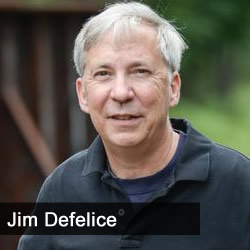
Gary Pinkerton welcomes Jim Defelice to the show. Jim wrote over 50 books, including American Sniper and The Pony Express. He talks about the things he learned about the military and great leaders while researching for his books. Jim also shares what started his book, Pony Express, and his WHY when writing books.
Announcer 0:04
Welcome to the heroic investing show. As first responders we risk our lives every day our financial security is under attack. Our pensions are in a state of emergency. A single on duty incident can alter or erase our earning potential instantly and forever. We are the heroes of society. We are self reliant and we need to take care of our own financial future. The heroic investing show is our toolkit of business and investing tactics on our mission to financial freedom.
Gary Pinkerton 0:39
Hello, and welcome to Episode 124 of the Heroic Investing show, podcast for first responders, members of the military veterans, and anyone looking to improve their financial future and gain some freedom with their time. We teach America’s heroes how to build passive income, build their startup business, and safely grow wealth through real estate and other alternative investments. We help current and prior first responders put protections and systems in place to enable them to build a life where they can focus on their passions, their service or product that they are uniquely gifted to share with the world. My name is Gary Pinkerton and I co host this show with Jason Hartman. Hopefully you find it inspiring. And please do head over to iTunes or wherever you get your podcasts and leave us a five star rating or another star if you desire. And please also provide me some feedback at Gary at Gary Pinkerton comm so on 124 I speak with well known author Jim de Felice. So I think you’ve probably heard of Jim, if you haven’t, I’m sure you’ve heard of his works. This is an amazing discussion with a prolific writer who has successful books that fall across many areas of interest, both fiction and nonfiction. And he’s been called a master storyteller. He’s a New York Times bestselling author. He’s probably most well known for American Sniper, Chris Kyle’s story navy seal, Chris Kyle, if you remember the gentleman who was killed at the shooting range by an army individual who was had some PTSD that he was struggling through, and Chris and a buddy were trying to help him out. very tragic story. And actually, Jim de Felice and I spend quite a bit of time talking about Chris. He’s also actually written three total books about Chris, he talks more in depth one about behind the story, you know, behind the man, the legend, Chris. And then he also does one wrote one, excuse me, called American wife, which is about Chris’s wife, Taya, and the struggles that she had gone through, has gone through. So you know, he’s done, as I said, a lot of nonfiction. His other really well known book is Omar Bradley, General at War. And then I think probably as well known as fighting blind and fighting blind, is written with a green beret story of know about extraordinary courage is the is the title. And it’s Ivan Castro, a green beret , as I mentioned, and another, you know, really well done book. So then he turns and he’s done a lot more books, actually, in fiction, and his fiction covers the gamut of war, history, geopolitics, cutting edge technology, you know, he’s written on obviously a pretty wide range, and some that maybe you have, you’ve come across as one on the American Revolution called the silver bullet, futuristic techno filled thrillers, the threat level black, I think you’re going to, you know, resonate with a lot of the stuff that Jim and I talked about, he actually obviously has been seriously moved throughout his life and working with American heroes. So it certainly fits well with our audience. But he’s got a very just an awesome outlook on what books can do, what researching of books can do for you, as an individual. And clearly, as someone who truly, truly loves his work, the one that I would really recommend getting, I’m sure you’ve read American Sniper, the one I would truly recommend getting is his most recent book on history, which is West like lightning, where he talks about the you know, the American frontier, as the Pony Express, cross continental railroad is starts to, to get up and running and how it changed America, connecting you know, Sacramento to Missouri initially, but then, you know, connecting on further so it played a huge part in things like the Postal Service, American Finance, the Gold Rush, and the Civil War eventually. So if you’re a historian, or if you just like to read about war veterans and and heroes, I think there’s a lot that Jim has to offer. And finally, you know, he’s he’s not just as I said, not just in the nonfiction, he’s written a lot of fiction. I mentioned a couple of them, codenamed Johnnie Walker is one that comes to mind which developed into a movie. And he also wrote the storylines for several video games, probably most notably is Ace Combat assault horizon, and then the follow on Afro Samurai, samurai, excuse me. So just a great guy. And I think you really get something out of this slightly off topic, but not really, you know, he’s talking about what all of you out there that are first responders and veterans and active duty, excuse me military are doing every day, kind of help keep things in perspective for the sacrifices that you’re making, and hopefully get you motivated for that next paper drill that comes up when you’re not out there actually fighting America’s wars and protecting those of us around. So thank you all for what you do. And I really do hope you get a lot out of this conversation with Jim.
Gary Pinkerton 5:59
Well, everyone, thanks, again for joining us. And as I mentioned in the introduction, we have an incredible guest one that most of you have heard from, if you haven’t heard about him, you’ve at least heard about all of his works, and huge volume of amazing books. Probably the most well known is American Sniper, because they made a movie about it. I was blown away by a couple of books he’s written that I hadn’t been tracking. And I consider myself to stay a little bit on the pulse here. So Jim, thanks for joining us, first of all, welcome.
Jim Defelice 6:28
Thanks for having me. It’s great to be on your show. And thanks for the opportunity to share what little I know about many different things with your audience.
Gary Pinkerton 6:39
Absolutely. So you know, American Sniper. Very, very well known with our audience. You know, it’s it’s something that we’ve all grown up as part of the bar battles in Afghanistan, of Desert Storm, even for the older the veterans in the group, were you know a lot of followers in the firefighter, police, emergency responders in the New York City area, really any city has had to deal with the repercussions of 911 and keep it from happening again. So we’re all kind of focused on those events on what got Chris Kyle over there. Can you speak just a little bit to know kind of your interaction writing that book?
Jim Defelice 7:14
Well, actually about 911. In New York, Chris had joined the Seals prior to 911. And had 911 not happened, you know, his career in the military would probably have been a fairly short one. But 911 happens, he ends up going over to a rack, you know, several times. His dad, in the meantime, had been working in New York and kind of formed a little bit of a bond with some of the firemen and the companies that were involved there. And so there was a little bit of feel kind of family connection. And I just remember if the after the book came out, we were doing publicity up in New York, we had a few hours. Chris, the one thing out of everything in New York that Chris wanted to see that he hadn’t was the actual site, and there was a little Museum, they’re still building the tower at the time. So Chris and I went down. And it was for both of us very emotional time. I had been at the down at the area the day after the attacks, but had kind of been, you know, down in the Wall Street area, but had never gone back to the physical site after that. And we both went through the small museum, and we came out and Chris looks at me and I look at him and and I said drank and he said drank and went up and we found a bar. And as a matter of fact, I think we did one or two immediate calls from there. The rumor has it that we did that again.
Gary Pinkerton 8:42
Wow. What year was that?
Jim Defelice 8:44
Well, the book came out in 2012. So I’m guessing that’s when it was.
Gary Pinkerton 8:48
Okay. Wow.
Jim Defelice 8:49
I know. Time flies. It’s amazing to me the movie. It seems like yesterday that I was looking at Bradley, Bradley Cooper, who you know, on the screen there the first time I saw that, you know, Bradley Cooper, Bradley Cooper and Chris. look nothing alike really. But the first time I saw Bradley on the, you know, on the big screen there is like, oh my god that, you know, he has Chris right down to the way you know, his hands and fingers were moving across the rifle. Great, fantastic, phenomenal actor and actually a great human being who’s done a lot for veterans, although he doesn’t publicize it. But the amazing thing the really amazing thing is Bradley had never met Chris, when he played the part. Unfortunately, Chris had been murdered before they met. So you know, he was wearing one thing that not a lot of people know Bradley was wearing Chris’s boots through a lot of those scenes.
Gary Pinkerton 9:46
Wow.
Jim Defelice 9:47
Just amazing. Yeah.
Gary Pinkerton 9:49
Yeah, I didn’t know that’s kind of thing we can’t get without talking to you know, the author and somebody who’s very close. What came immediately after American Sniper for you?
Jim Defelice 9:57
After American Sniper. Probably the big book that I published after that was codenamed Johnnie Walker. And that’s a story about an Iraqi interpreter actually, who worked partly with Chris for a short time as Chris. Chris put it, Johnny was the only Iraqi he trusted with a gun. I don’t know that was actually true, but it was a good line and a good clip from Chris. And then after that kind of continuing in this vein or tour or talking about those, those books, Taya Kyle Chris’s widow, and I collaborated on a book about kind of continued Chris’s story talked about some of the effects of fame, really. And then you’ll obviously the murder and what she’s she went through. So those are kind of those those books that relate to, you know, kind of Chris’s story
Gary Pinkerton 10:50
And read her book. Yeah, but I look forward to now that you’ve positioned that or you’ve discussed that in the light of being kind of a continuation of Chris’s story. I mean, I was certainly interested in her story that gave me a little bit of a boost to go read that one, too. I appreciate that. And then Omar Bradley was a little while after that, I think, yes?
Jim Defelice 11:08
You know, that was that book. The funny thing on that book is that took so long to research that you asked me when it was actually published, I might say, like 10 years ago, because it seems like I’ve been living with that book for so long. It was, you know, Omar Bradley, I was shocked to find out that Omar Bradley had not had full biography all about him in my biography, mainly, while it does cover his entire or most of his life, it really is focused on his world war two endeavors. And he really was an incredible General, one of our best generals of an army group, certainly, he was just a very quiet guy in term when it came to publicity. Obviously, you don’t get to be, you know, a three star, let alone a five star general without having something of an ego. So, you know, I can’t say that he was always that humble. But he believed in letting his underlings take credit. And he, as far as I know, he’s the only person who ever was under George Patton, and was over George Patton. And he certainly managed Patton as much as anyone could really manage baton very well. And he’s really unfortunately and undervalued general.
Gary Pinkerton 12:27
Wow. So before we leave the kind of the military theme, the researching of leaders and in Chris’s case, meeting leaders. What have you taken away from, well you just gave us one characteristic of a successful person to, when possible allow their their subordinates or their people to take credit. Are there any others to learn from great people like that?
Jim Defelice 12:48
The one thing that I would say that the people that we’re talking about, and I’d throw in, say, Ivan Castro, who was my last really big kind of big dashboard was done. Ivan was a special forces away, he’s just retired from the Green Berets. And he was in Afghanistan was also in Iraq, where he was hit by a mortar shell and blinded while his team was working with Delta Force. And I even went on, I mean, the is close to death. It goes on. And although he’s blinded, he recovers enough to become a marathon runner, even though he can’t say and do things like go to the Antarctic bicycle across America. And for me, I find that kind of resilience, that kind of American spirit, if you will, and just the will to just keep going, despite all adversity. I think that that’s one thing that’s common with a lot of leaders. Obviously, they’re not all blinded. There are some physical limits, clearly, but what I noticed is whether it’s a Chris Kyle, you know, an Omar Bradley, or even a Johnnie Walker, when they meet a barrier, they find some ways to go around it or through it, or just otherwise persevere.
Gary Pinkerton 14:03
Persistence. Yeah, I was just watching. Finally had a chance to watch the Winston Churchill recent movie. You know, I love his quote, that success is never final. Failure is never fatal. But it’s the courage that can continue that matters. Right. And I think I got the last part wrong, but but that’s the point. I mean, it’s the bigger picture of it, I think.
Jim Defelice 14:23
Yeah, absolutely. You know, absolutely. And, of course, World War Two, I mean, that’s one of the things I’m attracted to World War Two, I think you’re exactly for what you said, do you have so many examples of that.
Gary Pinkerton 14:34
And the inspirational people who I mean that that was more that was lost. That’s, that’s fascinating. So a huge change. I don’t know how to transition to this other than just to point out the fact that it’s a big change, you know, you know, the Pony Express. Tell us about this.
Jim Defelice 14:49
Well, you know, it is it is a big change. And people say well, you’re doing the Pony Express now. Well, first of all, you know, I write about heroes, you know, and people persevere And just keep going when there’s when there’s a lot of barriers. And that’s certainly what the riders for the Pony Express were doing. But the other thing really that attracted me after kind of spending so much time either literally with someone with these people like Chris, or figuratively with Omar Bradley and going through the records and talking to people that knew him. I wanted something where we’re still history, we’re still talking about heroic ventures. But you know, is also kind of a good old fashioned fun read, you know, where there’s, there’s fun stories, and legends, as well as the always historical fact. And I just got to remembered a lot of the books that I loved reading when I was growing up. And a lot of the stories I loved reading about, you know, a lot of the Old West gunfighters and everything and the great thing about the Pony Express is kind of intersects all of that. It happens, right? Well, actually, in about two thirds of America, you know, kind of intersects runs right across America, from Missouri, directly to Sacramento, and then on to San Francisco. And it happens at a really, really important time in our history. It’s a civil, it’s right as the civil war starts. So for me, besides that fun read, and I tried to make it a fun read. You know, there’s also a lot of important historical issues at the time, and I get to talk about those.
Gary Pinkerton 16:24
Give a couple of examples that impacted the Express.
Jim Defelice 16:27
Sure, well, you have, well, first of all, obviously, you have the Civil War. So you have you know, both sides, and you have bloody it starts the headquarters of the Pony Express is in Missouri, which you know, is really as a both sides, you know, and that’s even before that’s during talk about that in the bug that’s bite as the Pony Express is writing even before the war starts, then you have Bleeding Kansas. Also, that’s obviously a big issue. It’s also a big issue in California and back east, because they want the gold and silver and that they’re still mining, even though the Big Gold Rush has peaked already, but they’re still pulling pulling money out of the ground there. So they want to keep that connection, guys, they have this Civil War. And because of the gold, you know, you have to find that you have a lot of the starts of modern finance, which develop. And the pony is a little bit involved. Because the men, the three men who start the Pony Express, what they’re trying to do is start really an empire of transportation, information and finance. They have an insurance company, they have a bank, the bank is well funded, at least in theory well funded. And absolutely, they could have a $10,000 notes, you know, so they’re really they were ambitious. Some of the other obvious issues, I guess, the The Telegraph, and the train, both of which were taken into account by the guys that started the Pony Express and they use those, you know, kind of in there not only in their planning, but in their day to day operations. So, you know, so you have all of this innovation, entrepreneurship, as well as you know, good old gunplay, horse riding and you have Indian Wars and Mormons, pioneers, all that good stuff.
Gary Pinkerton 18:15
So just telling that story. There’s a lot of American history in there. You know what I mean?
Jim Defelice 18:19
Yeah, absolutely. Absolutely. And that’s what you know, that’s what attracted to me. So, sometimes my answer is when somebody asked me what to write about that, I’d say, well, who would resist it? I mean, you know, you’ve got Buffalo Bill, you’ve got absolutely, absolutely. And, you know, if you’re serious literary person, you’ve even got Mark Twain, Mark Twain is in there visiting some of the stations. And I even got a reference to roughing it, which was one of my favorite books when I was, I guess, around 20 or so.
Gary Pinkerton 18:53
I’m sure all the books are different. You commented that you were with Omar Bradley for 10 years. How are you researching several books at once? How long is it from kind of when you physically put pen to paper before it’s published?
Jim Defelice 19:07
Yeah, it totally depends on the it totally depends on the on the work. And like Pony Express. For instance, it took a few months where the background research and I got to give a shout out. And a big thank you to my wife, Deborah, who actually helped and did a lot of the preliminary research for me, not only in Pony Express, but also on Omar Bradley. She spent a lot of time going through archives a months and months and months. And then working on the Pony Express is kind of not necessarily full time research and background checking to start. And then I spent, I guess a little bit over a month physically on the trail, kind of retracing the trail. Going to the small museums, they’re seeing what it looks like now, getting lost somewhere in Utah and Nevada. I’m not really sure aware if I knew where I wouldn’t have been lost kind of wandering Round occasionally going, I guess some places I wasn’t supposed to go. But you know, it’s all in the name of research, you know. So when that phase kind of ends, then it can take usually several months to write the book on that.
Gary Pinkerton 20:16
Okay. I just participated in the book launch. And writing, I was a co author, there wasn’t much research associated other than deep thought it was telling your own stories. But it took a while I was amazed. If I asked you, this could be out of left field, and hopefully it’s easy to answer. But what is your Why? Why do you write books? Obviously, it inspires you, I can see it in you. And obviously, the books have been very successful, what’s your Why?
Jim Defelice 20:39
The why is because you always find out something that you didn’t search for. And that’s every day, that’s every day. Now, a lot of times, it’s really hard to find that out. And there are, you know, occasionally days that, you know, you’re not finding anything out, buddy, it’s your lucky just that, you know, just to make it to the end of the day. But in the business end of actually anything that’s involved in entertainment. And writing really is involved, there can be frustrating and tricky. But there’s a certain very difficult to describe sensation that you get, you know, when you are able to put together something that hadn’t existed before or to come away with some insight that you personally hadn’t had before. And that’s, you know, that’s what gets me up every morning to get going.
Gary Pinkerton 21:29
So it’s finding it and also packaging it in the way in which it is there’s enough of a light on it that people recognize it, and then you get to share. That’s pretty neat. I guess I kind of
Jim Defelice 21:39
Yeah, the other thing I would say is there’s always a point in every book that I’ve ever written that I come to a point where it’s totally impossible to proceed, I just can’t stop, there’s a problem I just can’t get through, I cannot figure that thing out. I wander I’d knock my head against the wall, I go for a run, whatever, it doesn’t work, it doesn’t work, I cannot do it. This is it, I finally reached the point where it’s over, man, it’s just like, you know, just just hang it up, you know, just go drink some bourbon and smoke some cigars for the rest of your life because you ain’t doing it anymore. And somehow, somehow, someway. It gets resolved. And you kind of blunder through it in the weirdest way. And getting through that point is, you know, it’s salvation. I won the lottery man, because I just, you know, I don’t have to change my life all that much. I can just keep going.
Gary Pinkerton 22:38
Wow. And so one last question that came to mind for me is, is it obvious what the next story is in most cases? Do you have a list of things that things percolate to the top? or do something just kind of hit you at the moment?
Jim Defelice 22:51
Yeah, you know, it’s funny, I think most writers really are like this. I mean, you know, you the real problem is, you know, as you walk down the street, you see a million stories, you know, you see 100 stories. And the real problem is kind of trying to edit those possibilities and keep them down, kind of in the I have the benefit of doing and having had success, extremely lucky eo in many different fields, whether it’s a novel before American Sniper is actually better known as a novelist. Even though I’ve done nonfiction in a memoir, yes, I’ve been ridiculously lucky to be able not only to do do novels, but to do nonfiction, to do memoirs to do video games and screenplays even but the problem you know, when you’re kind of in, in that world, or in this world, you know, you also you need to reach a fairly large audience, you need to be commercial, and you need to go with the decisions that the big publishers or the movie studios or whatever making So, you know, it’s kind of a balance between what you know, what the market wants and what you want. And at the end of the day, if you’d like to feed your family, you know, you go with what the market.
Gary Pinkerton 24:09
Exactly, so I had totally neglected beside of developing intensive storylines for the gaming industry. I think part of it’s because I don’t see that anywhere. I mean, I know it’s on your website, certainly, but like I don’t play games, so I don’t go oh my gosh, this is gyms, I got to ask him about it. What are some example real quick, just a couple that you’ve participated in, if you can.
Jim Defelice 24:33
Ace Combat. Assault Horizon. Did a lot did a lot of
Gary Pinkerton 24:37
Cool. So my son is big into those kinds of games, so I’ll certainly mentioned it to him. Jim, this has been well first of all, to the audience, your name dot com. Easiest way, I think to find it’s a wonderful website, anything else other than Jim de felice.com?
Jim Defelice 24:54
No, that’s not very creative when it comes to names of websites. Jim de felice.com. I’m on Twitter. Facebook every so often I tweet out but often it’s about your the Yankees. I know not everybody’s the Yankee fan. So I apologize in advance, but you can find me there. Hopefully you can check out my books, Westlife lightning or something else at Amazon Barnes and Noble books a million or you know, hopefully it’s your local bookstore. I mean, the independent booksellers of America, those little those little stores, you know, with kind of mom and pop organizations really, really are great for our communities. And they often have great recommendations, not necessarily my books, but other recommendations.
Gary Pinkerton 25:40
And they’re important to support whether it’s your books or not, that’s a great point. Well, the lessons that you just gave us, Jim, on, on the reminders, at least on on persistence on humility, characteristics of a great leader, entrepreneurship, very helpful, very well, very well pointed towards this audience. So ladies and gentlemen, hope you got something out of it. And Jim de felice, thank you so much for giving us a few minutes here this morning to talk about your journey your books. I’ve got a couple of my list already and going forward.
Jim Defelice 26:07
Well, thanks a lot. I really appreciate the time.
Jason Hartman 26:12
Thank you so much for listening. Please be sure to subscribe so that you don’t miss any episodes. Be sure to check out this shows specific website and our general website heart and Mediacom for appropriate disclaimers and Terms of Service. Remember that guest opinions are their own. And if you require specific legal or tax advice, or advice and any other specialized area, please consult an appropriate professional. And we also very much appreciate you reviewing the show. Please go to iTunes or Stitcher Radio or whatever platform you’re using and write a review for the show we would very much appreciate that. And be sure to make it official and subscribe so you do not miss any episodes. We look forward to seeing you on the next episode.
No related posts.